If you want to sound more polished at work, you may be looking for other ways to say I would love to professionally. While the original phrase is warm and friendly, it can sometimes sound too casual or overly enthusiastic in business emails, workplace chats, or client communication. Choosing the right alternative helps you sound confident, respectful, and professional without losing your positive tone.
Whether you are replying to a colleague, accepting an invitation, offering help, or expressing interest in a project, there are many natural expressions that fit different situations. This guide explains what the phrase means, when to use it, and the best professional alternatives with practical examples.
Quick Answer
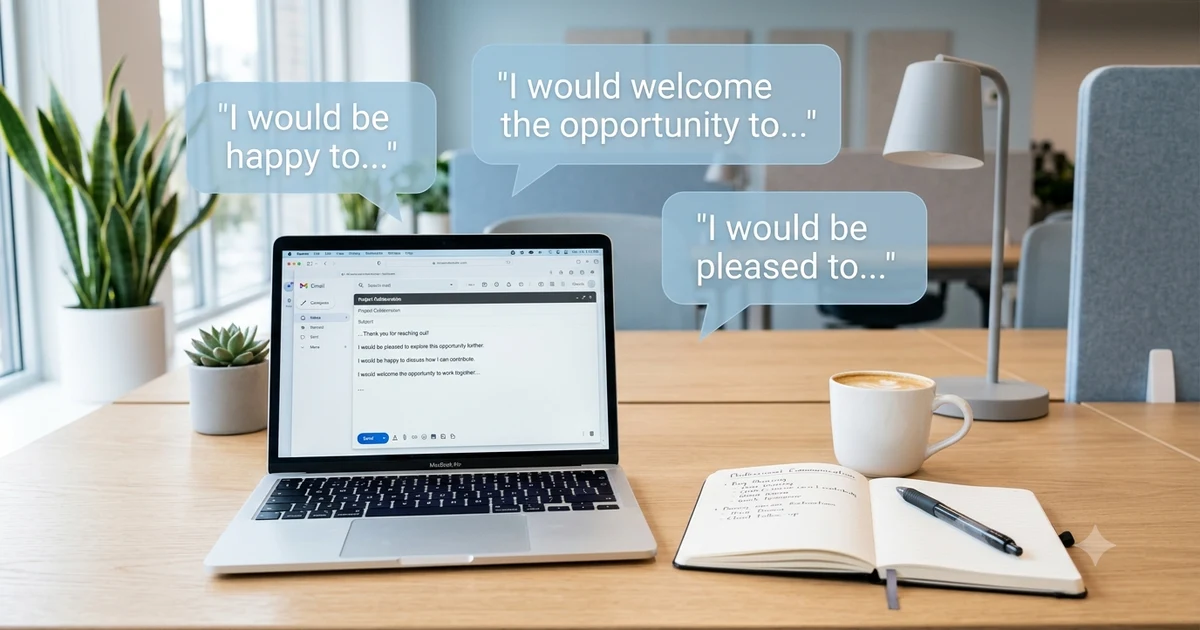
Other ways to say I would love to professionally include I would be happy to, I would be pleased to, I would appreciate the opportunity to, I would welcome the chance to, and I would be glad to. These alternatives sound polite, professional, and appropriate for emails, meetings, and workplace conversations.
TL;DR
- Meaning: Expresses willingness or enthusiasm in a polite way.
- Tone: Friendly, positive, and respectful.
- Common use: Business emails, interviews, meetings, and client communication.
- Best for: Professional messages where you want to sound courteous.
- Formality: Mostly professional, though some alternatives are more formal than others.
What It Means
The phrase I would love to shows that you are interested in doing something and feel positive about it. In everyday conversation, it sounds warm and natural.
In professional communication, however, some people prefer softer alternatives because they create a more balanced and businesslike tone. Instead of sounding emotional, they focus on willingness, appreciation, or cooperation.
For example:
- I would love to discuss the proposal.
- I would be happy to discuss the proposal.
Both sentences are polite, but the second one often fits workplace communication better.
Basic Explanation
You do not always need to replace I would love to. It is perfectly acceptable in many modern workplaces, especially in friendly company cultures.
Still, certain situations call for a more formal expression, including:
- Business emails
- Job applications
- Client communication
- Executive correspondence
- Professional networking
- Customer service replies
Using a professional alternative helps your message sound confident without becoming cold or distant.
Tone and Emotional Meaning
This phrase carries a positive and welcoming tone. It tells the other person that you genuinely want to participate or help.
Depending on the replacement you choose, your message can sound:
| Alternative | Tone |
|---|---|
| I would be happy to | Friendly and professional |
| I would be glad to | Warm and polite |
| I would be pleased to | Formal and respectful |
| I would welcome the opportunity to | Highly professional |
| I would appreciate the opportunity to | Respectful and humble |
| I would be delighted to | Formal and enthusiastic |
| I would be more than happy to | Warm and conversational |
Think about your audience before choosing one. A client may expect a different tone than a close coworker.
Common Situations Where It Appears
These expressions work well in many workplace situations.
Responding to an invitation
- I would be happy to attend the meeting.
- I would be pleased to join your presentation.
Accepting a project
- I would welcome the opportunity to lead this project.
- I would be glad to assist your team.
Offering help
- I would be happy to help with the report.
- I would be pleased to answer any questions.
Networking
- I would appreciate the opportunity to connect.
- I would welcome the chance to learn more about your company.
Interview follow-up
- I would be delighted to discuss the position further.
- I would appreciate the opportunity to meet with your team.
Examples in Real Conversations
Situation
A manager asks if you can present next week.
Example
I would be happy to present the project update next Tuesday.
Meaning
You accept the request in a polite and professional way.
Situation
A recruiter invites you for an interview.
Example
I would be pleased to meet with your team and discuss the role.
Meaning
You express appreciation while maintaining a formal tone.
Situation
A client asks whether you can provide additional information.
Example
I would be glad to send the requested documents this afternoon.
Meaning
You show willingness to help without sounding overly casual.
Situation
A colleague requests assistance.
Example
I would be happy to review the presentation before tomorrow’s meeting.
Meaning
You offer support in a friendly and cooperative manner.
Situation
Someone asks whether you are interested in joining a committee.
Example
I would welcome the opportunity to contribute to the committee.
Meaning
You express genuine interest while sounding professional.
Situation
You are following up after an interview.
Example
I would appreciate the opportunity to discuss the next steps whenever convenient.
Meaning
You remain respectful while showing continued interest.
Situation
A customer asks if you can schedule a call.
Example
I would be pleased to arrange a call at a time that works for you.
Meaning
You respond professionally and make the customer feel valued.
Similar Terms and Related Professional Phrases
Many expressions can replace I would love to depending on your audience and the situation. Some sound warm and conversational, while others fit formal business communication.
| Phrase | Best For | Tone |
|---|---|---|
| I would be happy to | Emails, meetings, workplace chats | Friendly and professional |
| I would be glad to | General business communication | Warm |
| I would be pleased to | Clients, executives | Formal |
| I would appreciate the opportunity to | Job applications, interviews | Respectful |
| I would welcome the opportunity to | Professional networking | Professional |
| I would be delighted to | Special occasions, formal invitations | Enthusiastic and formal |
| I would be more than happy to | Customer service | Friendly |
| I would enjoy the opportunity to | Creative industries | Positive |
| I would be grateful for the opportunity to | Scholarship or internship applications | Humble |
| I am happy to | Casual workplace communication | Natural |
What is the difference?
Although these phrases express willingness, each one creates a slightly different impression.
- I would be happy to sounds friendly without being too personal.
- I would be pleased to feels more formal and polished.
- I would welcome the opportunity to emphasizes genuine interest.
- I would be delighted to adds extra enthusiasm and works well for important occasions.
Choose the one that matches your relationship with the reader.
When You Should Use It
Professional alternatives work best when you want to sound positive while maintaining credibility.
Use these expressions when you are:
- Accepting a meeting invitation
- Responding to a recruiter
- Writing a cover letter
- Replying to a client
- Offering assistance
- Volunteering for a project
- Networking with professionals
- Thanking someone for an opportunity
- Following up after an interview
- Communicating with customers
These alternatives help you sound confident without appearing overly emotional.
When You Should Avoid It
Even professional alternatives do not fit every situation.
Avoid using them when:
- You need to give a direct instruction.
- You are writing company policies.
- You are delivering urgent information.
- You are declining a request.
- You need a short factual response.
For example:
Less suitable
I would be happy to inform you that your payment is overdue.
Better
Your payment is now overdue.
Professional writing should match the purpose of the message.
Is It Formal or Informal?
The original phrase is generally polite, but it falls closer to conversational English than formal business language.
| Expression | Formality |
|---|---|
| I would love to | Semi-formal |
| I would be happy to | Professional |
| I would be pleased to | Formal |
| I would appreciate the opportunity to | Very formal |
| I would welcome the opportunity to | Very professional |
| I would be delighted to | Formal |
Workplace emails
Good
- I would be happy to assist.
Less suitable
- I would love to help with your financial audit.
The original phrase is not wrong, but a more neutral alternative often sounds stronger in professional settings.
Common Misunderstandings
People sometimes assume that I would love to always sounds unprofessional.
That is not true.
Many modern companies encourage warm and natural communication. In friendly workplaces, saying I would love to join the meeting or I would love to help can sound perfectly appropriate.
The key is understanding your audience.
A startup team may appreciate a conversational tone, while a law firm or government office may expect more formal language.
Another misunderstanding is that professional writing must sound cold. It does not.
Expressions such as I would be happy to and I would be glad to remain warm while keeping a professional tone.
How People Use It in Professional Messages
Here are a few realistic workplace examples.
Email to a client
Hello Sarah,
I would be pleased to prepare a revised proposal based on your feedback.
Best regards,
Michael
Job interview reply
Thank you for your invitation.
I would be delighted to meet with your team next week.
Kind regards,
Emma
Internal workplace chat
Hi James,
I would be happy to review the report before our afternoon meeting.
Networking message
Thank you for reaching out.
I would welcome the opportunity to learn more about your organization.
Customer support response
Thank you for contacting us.
I would be glad to assist you with your account.
USA and Tier 1 Country Usage
In the United States, Canada, the United Kingdom, Australia, and New Zealand, professionals often choose language that is both polite and approachable.
That is why phrases like these are common:
- I would be happy to
- I would be glad to
- Happy to help
- I’d be happy to discuss this further
- I would welcome the opportunity
The original phrase still appears in many workplaces, especially in creative industries, education, nonprofit organizations, and technology companies.
More traditional industries, such as finance, legal services, healthcare, and government, often prefer more neutral wording.
There is no universal rule. Consider your audience, your relationship with the reader, and the level of formality expected.
Quick Reference Table
| Context | What It Means | Tone | Best Use | Avoid If |
|---|---|---|---|---|
| Business email | Willing to help | Professional | Clients and coworkers | Legal notices |
| Job application | Strong interest | Respectful | Cover letters | Technical reports |
| Interview response | Accepting an invitation | Professional | Recruiters | Formal contracts |
| Customer support | Ready to assist | Friendly | Customer communication | Policy documents |
| Networking | Interest in connecting | Positive | LinkedIn messages | Complaint emails |
| Team collaboration | Offering help | Cooperative | Internal communication | Urgent instructions |
| Executive communication | Respectful willingness | Formal | Senior leadership | Emergency updates |
Conclusion
Finding other ways to say I would love to professionally can make your emails, workplace chats, and business conversations sound more polished without losing a friendly tone. While the original phrase is perfectly acceptable in many modern workplaces, alternatives such as I would be happy to, I would be pleased to, and I would welcome the opportunity to often fit professional settings better.
The best choice depends on your audience and the situation. A friendly coworker may appreciate a warm response, while a client or hiring manager may expect a more formal expression. By matching your language to the context, you can communicate clearly, show respect, and leave a positive impression.
FAQs
Can I use I would love to in a professional email?
Yes. It is acceptable in many workplaces, especially if the company has a friendly culture. For formal business communication, however, phrases like I would be happy to or I would be pleased to often sound more polished.
Is I would love to too informal for work?
Not necessarily. The phrase is friendly rather than informal. It works well with coworkers or clients you know, but more neutral alternatives may be better for executives, job applications, or formal business emails.
What is the most formal alternative to I would love to?
Some of the most formal options include:
- I would welcome the opportunity to
- I would appreciate the opportunity to
- I would be pleased to
- I would be delighted to
These expressions work especially well in cover letters, interviews, and client communication.
What should I say instead of I would love to in a cover letter?
You can write:
- I would welcome the opportunity to discuss my qualifications.
- I would appreciate the opportunity to contribute to your team.
- I would be pleased to discuss how my experience matches this role.
These options sound confident and professional.
Which alternative sounds the most natural in everyday business communication?
I would be happy to is one of the most common choices. It sounds friendly, professional, and natural in emails, meetings, customer service, and workplace conversations.
Is I would be delighted to more formal than I would love to?
Yes. I would be delighted to generally sounds more formal and refined. It is often used in invitations, executive communication, and important professional correspondence where you want to express enthusiasm respectfully.