
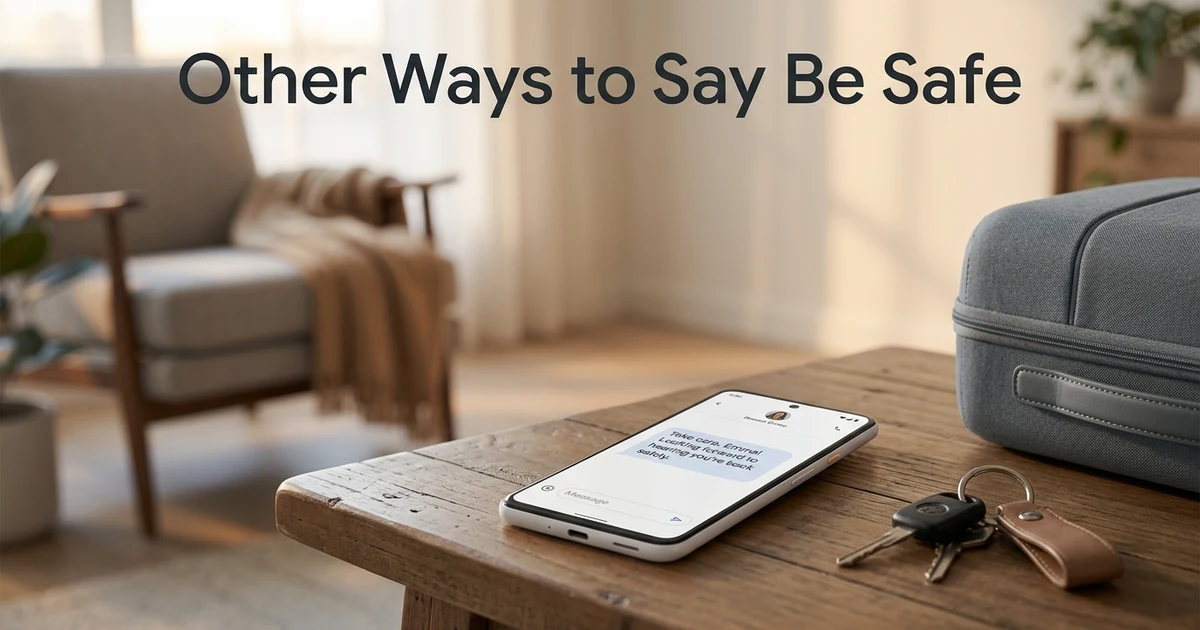
There are many situations where you want to tell someone to take care of themselves without using the same phrase every time. Other Ways to Say Be Safe can help you sound warmer, more caring, professional, casual, or natural depending on who you are speaking to.
You might say it before a friend drives home, after saying goodbye to a family member, in a text to someone traveling, or at the end of a conversation. The best alternative depends on the situation and the relationship. Some expressions sound friendly and relaxed, while others show deeper concern or work better in professional communication.
Quick Answer
Common alternatives include Take care, Stay safe, Look after yourself, Take care of yourself, Be careful, Keep safe, Have a safe trip, Get home safely, and Stay out of trouble. The right choice depends on the situation and how close you are to the person.
TL;DR
- Meaning: You want someone to avoid danger and take care of themselves.
- Tone: Usually caring, friendly, polite, and concerned.
- Common use: Goodbyes, travel, driving, bad weather, late-night messages, and everyday conversations.
- Where it appears: Texts, chats, social media, phone calls, emails, and face-to-face conversations.
- Formal or informal: The phrase itself works in casual situations, while options such as Take care or Please travel safely can suit more formal contexts.
- Best approach: Choose an alternative that matches the situation rather than simply replacing the phrase word for word.
What Other Ways to Say Be Safe Means
The phrase be safe expresses concern for another persons well-being. It usually means that you hope the person avoids danger, makes sensible choices, or reaches their destination without problems.
For example, a friend might say it before you drive home late at night. A parent might use it before their child leaves the house. A coworker might say it before someone travels for work.
The expression does not always suggest that a serious danger exists. Often, it simply shows care.
Some natural alternatives include:
- Stay safe
- Take care
- Look after yourself
- Take care of yourself
- Be careful
- Keep safe
- Get home safely
- Have a safe trip
- Travel safely
- Stay out of trouble
- Take it easy
- Watch yourself
- Look after yourself out there
- Have a safe journey
- Drive safely
The meaning can change slightly depending on the phrase you choose.
Full Explanation of the Phrase
Be safe is not an abbreviation or slang term. It is a short everyday expression made from the verb be and the adjective safe.
The phrase works as a simple reminder or caring farewell. You may use it when someone is leaving, traveling, driving, working in a potentially risky environment, or dealing with difficult weather.
For example:
- Be safe on your way home.
- Be safe driving tonight.
- Be safe while you are traveling.
- Be safe out there.
The expression can stand alone or form part of a longer sentence. Its short length makes it especially common in texting and casual conversation.
How People Use It in Texting or Online Conversation
In texting, people often use short expressions because the meaning is already clear from the context. Be safe works well at the end of a conversation, especially when someone is heading somewhere.
A text might look like:
I know you have a long drive tonight. Be safe.
Another person might write:
Heading out now. Be safe.
The phrase also appears in group chats, social media comments, and direct messages. Someone may use it after hearing that another person has a long journey, is working late, or is dealing with severe weather.
In casual online conversation, alternatives such as stay safe, take care, and drive safely often sound equally natural.
On social media, people may also use the phrase in response to posts about travel, storms, outdoor activities, or difficult circumstances.
Tone and Emotional Meaning
The tone usually feels caring and polite rather than dramatic. It shows that you have some concern for the other person without necessarily suggesting that something bad will happen.
Different alternatives create slightly different impressions:
| Phrase | General tone |
|---|---|
| Stay safe | Caring and common |
| Take care | Warm and versatile |
| Be careful | More direct |
| Look after yourself | Warm and personal |
| Drive safely | Practical and specific |
| Travel safely | Polite and appropriate for travel |
| Get home safely | Caring and personal |
| Keep safe | Friendly, slightly more regional |
| Have a safe journey | Polite and travel-focused |
| Stay out of trouble | Playful or teasing |
The relationship also matters. Get home safely may sound especially caring when sent to a close friend or family member. Travel safely can sound more neutral and appropriate for someone you know professionally.
Common Situations Where It Appears
You can use these expressions in many everyday situations.
Before Someone Drives
Driving creates an obvious reason to mention safety.
- Drive safely.
- Take care on the road.
- Get home safely.
- Be careful driving.
Before a Trip
Travel-related alternatives sound more specific.
- Have a safe trip.
- Travel safely.
- Have a safe journey.
- Take care while you are away.
At the End of a Late-Night Conversation
If someone plans to walk or drive home late, a caring goodbye works well.
- Get home safely.
- Take care getting home.
- Stay safe tonight.
- Look after yourself.
During Bad Weather
You may want to show concern without making the message sound overly serious.
- Stay safe in the storm.
- Take care out there.
- Be careful on the roads.
- Keep safe during the weather.
Before Outdoor Activities
Hiking, camping, skiing, boating, and similar activities can naturally invite a safety reminder.
- Have a safe trip.
- Take care out there.
- Stay safe on the trail.
- Look after yourself.
At Work
For colleagues, a practical expression usually sounds more natural.
- Have a safe trip home.
- Travel safely.
- Take care.
- Have a safe journey.
Examples in Real Conversations
Situation: A Friend Is Driving Home
Example: It is getting late, so drive safely and text me when you get home.
Meaning: You care about your friend getting home without trouble.
Situation: Someone Is Flying to Another City
Example: Have a safe flight. Hope everything goes smoothly.
Meaning: You are wishing the person a safe journey.
Situation: A Coworker Is Leaving After a Late Shift
Example: Have a safe trip home.
Meaning: You are politely showing concern without sounding overly personal.
Situation: A Family Member Is Traveling
Example: Take care while you are away and let us know when you arrive.
Meaning: The message communicates warmth and concern.
Situation: A Friend Is Going Hiking
Example: Have fun out there, and stay safe on the trail.
Meaning: You are combining encouragement with a practical safety reminder.
Situation: Someone Is Walking Home at Night
Example: Get home safely and let me know when you are there.
Meaning: You want the person to reach home safely and are showing personal concern.
Situation: A Friend Is Going Out in Bad Weather
Example: Take care out there. The roads look rough tonight.
Meaning: You are responding to a specific safety concern.
Similar Terms or Related Phrases
Several expressions have nearly the same basic meaning, but they do not all carry the same tone.
Stay Safe
Stay safe is one of the closest alternatives. It sounds natural in texts, conversations, social media posts, and everyday goodbyes.
Take Care
Take care has a broader meaning. It can refer to general well-being rather than physical safety alone. It also works particularly well as a goodbye.
Be Careful
Be careful sounds more direct. It usually fits a specific situation where some risk exists.
Look After Yourself
Look after yourself sounds warm and personal. It can refer to physical safety, health, rest, and general well-being.
Drive Safely
Drive safely works best when the person is driving. It gives the message a clear purpose.
Get Home Safely
Get home safely focuses on reaching home without problems. It often sounds caring when used with friends, family members, or someone leaving late.
Travel Safely
Travel safely fits trips and journeys. It sounds slightly more neutral than some personal alternatives.
Keep Safe
Keep safe has the same general idea as stay safe. It may sound more natural in some varieties of English than in American English.
When You Should Use It
Choose a safety-related phrase when the situation gives you a natural reason to show concern.
Good opportunities include:
- Someone is driving a long distance.
- A friend is traveling alone.
- Someone is heading home late.
- A person is going somewhere unfamiliar.
- Severe weather could affect travel.
- Someone works in a physically demanding environment.
- A friend is going camping, hiking, or boating.
- A family member is leaving for a trip.
- You are ending a caring conversation.
- Someone tells you about a situation that could involve some risk.
You do not need a serious reason every time. In many relationships, a simple safety reminder has become a normal way to say goodbye.
When You Should Avoid It
The phrase itself is not rude, but the wrong context can make a safety message sound strange or overly serious.
Avoid using it when:
- There is no connection between the conversation and safety.
- You are writing a highly formal business document where a more specific closing would work better.
- The message could unnecessarily worry someone.
- You use it repeatedly in every conversation and it starts to sound automatic.
- You are speaking to someone who may interpret your concern as criticism or distrust.
For example, telling a colleague Be safe after a routine office meeting may sound slightly unusual unless there is a reason for saying it.
A more natural workplace closing might be Take care or Have a good evening.
Is It Formal or Informal?
Be safe sits mostly in the casual to neutral range. People commonly use it with friends, relatives, classmates, neighbors, and coworkers.
It can appear in professional communication too, but context matters. In a business email, Travel safely may fit a work trip better than a very personal expression.
Casual
- Stay safe.
- Take care.
- Get home safely.
- Be careful.
Neutral
- Have a safe trip.
- Travel safely.
- Have a safe journey.
Professional
- Safe travels.
- Wishing you a safe journey.
- Have a safe trip home.
A professional message does not necessarily need to sound cold. A short, thoughtful closing can still feel natural.
Common Misunderstandings
People sometimes assume that saying be safe means the speaker believes something dangerous will happen. Usually, that is not the case.
The phrase often works as a simple expression of care.
Another possible misunderstanding comes from tone. Be careful can sound more serious than take care because it directly tells someone to watch out.
For example, Take care on your way home sounds gentle, while Be careful on your way home can sound more concerned or cautionary.
Context also affects emotional meaning. A close friend may interpret get home safely as a warm gesture, while a casual acquaintance may hear it as simple politeness.
USA and Tier 1 Country Usage
In the United States, be safe, stay safe, take care, and drive safely are all familiar expressions in everyday English. People commonly use them in texts, phone conversations, and casual goodbyes.
In Canada, the UK, Australia, and New Zealand, similar expressions are also widely understandable. You may encounter regional preferences in wording, especially with expressions such as keep safe, look after yourself, or have a safe journey.
The safest approach is to choose the expression based on context rather than assuming that one version works equally well everywhere.
For an international English audience, stay safe, take care, and travel safely are especially easy to understand.
Quick Reference Table
| Context | What It Means | Tone | Best Use | Avoid If |
|---|---|---|---|---|
| Stay safe | Take care of yourself | Friendly | Texts and everyday goodbyes | You need a highly specific message |
| Take care | Look after yourself | Warm and neutral | General goodbyes | You need to mention a specific risk |
| Be careful | Watch out for danger | Direct | Situations involving risk | You want a very soft tone |
| Get home safely | Reach home without trouble | Caring | Late-night departures | The person is not going home |
| Drive safely | Stay safe while driving | Practical | Driving situations | The person is walking or flying |
| Travel safely | Have a safe journey | Neutral | Trips and travel | No travel is involved |
| Look after yourself | Take care of your well-being | Personal | Friends and family | Very formal communication |
| Have a safe journey | Travel without problems | Polite | Travel messages | Casual one-line texts where it feels too formal |
| Keep safe | Stay out of danger | Friendly | Everyday conversation | You want the most universally common American phrasing |
| Stay out of trouble | Avoid problems | Playful | Friends and familiar people | Serious or professional situations |
Conclusion
There are plenty of natural Other Ways to Say Be Safe, from simple choices such as stay safe and take care to more specific options such as drive safely, travel safely, and get home safely. Each expression carries a slightly different tone.
For casual texting, stay safe and take care usually work well. For travel, have a safe trip or travel safely sounds more specific. In a professional setting, a neutral phrase such as safe travels may feel more appropriate.
The key is to match the wording to the situation and your relationship with the person. A short safety message can sound thoughtful and natural when it fits the conversation.
FAQs
What does be safe mean in text?
Be safe in text usually means that you want someone to take care of themselves and avoid danger. People commonly use it as a caring goodbye or reminder.
What does be safe mean in texting?
In texting, be safe is a short and friendly way to show concern. It often appears when someone is driving, traveling, heading home, or going somewhere that may involve some risk.
Is be safe rude?
No, be safe is generally not rude. It usually sounds polite, caring, and friendly. However, the tone can feel unusual if you use it in a situation where there is no obvious reason to mention safety.
Can I use be safe in a professional message?
Yes, but context matters. For workplace communication, alternatives such as travel safely, have a safe trip, or safe travels may sound more natural when someone is traveling for work.
What is the difference between be safe and stay safe?
Both expressions communicate concern for someones safety. Be safe can sound like a direct reminder, while stay safe often feels more like a friendly farewell or general wish.
What can I say instead of be safe to a friend?
You can say take care, stay safe, get home safely, look after yourself, drive safely, or take care out there. The best option depends on what your friend is doing.
What is a warm alternative to be safe?
Take care and look after yourself are warm alternatives. Get home safely can also sound especially caring when someone is leaving late or traveling home.