If you are looking for other ways to say break a leg, you probably want a phrase that wishes someone good luck before an important performance, event, interview, presentation, competition, or other big moment. Break a leg is a well-known English expression, especially in theater, but it does not literally refer to getting hurt.
Depending on the situation, you can choose something more casual, professional, encouraging, funny, or warm. Common alternatives include good luck, you’ve got this, best of luck, knock them dead, go for it, and wishing you the best.
Quick Answer
Other ways to say break a leg include good luck, best of luck, you’ve got this, go for it, knock them dead, give it your best, and wishing you the best. Break a leg is an informal expression used to wish someone success, particularly before a performance or important event. It sounds friendly and encouraging rather than rude.
TL;DR
- Meaning: A way to wish someone success before an important event.
- Tone: Friendly, encouraging, and usually informal.
- Common use: Performances, auditions, competitions, presentations, interviews, and exams.
- Where it appears: Conversations, texts, group chats, social media, and casual messages.
- Formal or informal: Break a leg is mainly informal, while best of luck or wishing you success can work in more formal situations.
- Best alternatives: Good luck, you’ve got this, best of luck, go for it, and wishing you the best.
What Break a Leg Means
Break a leg is an idiomatic way to wish someone good luck. The phrase sounds negative if you take it literally, but English speakers understand it as a positive expression.
People often use it before something that matters to the other person, such as a stage performance, audition, speech, competition, or major presentation.
For example:
- You have your audition tonight. Break a leg.
- Break a leg at your performance tomorrow.
- You prepared well for the presentation. Break a leg.
The phrase usually carries a supportive tone. It tells someone that you hope things go well without directly saying good luck.
Full Explanation of the Phrase
Break a leg is not an abbreviation, acronym, or texting shortcut. It is an idiom.
The literal meaning suggests an injury, but the intended meaning communicates good wishes. This makes it similar to other English expressions whose meanings cannot be understood simply by looking at each individual word.
The expression appears most often in performing arts contexts, although people also use it more broadly before important events.
If someone says break a leg before your speech, they are not wishing you harm. They are encouraging you to perform well.

How People Use It in Texting or Online Conversation
In texting, break a leg works as a short and friendly way to encourage someone.
You might see it in:
- Text messages before an audition
- Group chats before a competition
- Messages before a school presentation
- Social media comments
- Casual conversations before an interview
- Messages to someone performing on stage
Examples include:
- Your audition is today. Break a leg.
- You’re ready for this. Break a leg.
- Good luck with the show tonight. Break a leg.
- Break a leg at your presentation tomorrow.
In online conversation, context usually makes the meaning obvious. If the recipient knows they have an important event coming up, they will generally understand the phrase as encouragement.
Tone and Emotional Meaning
The phrase usually sounds friendly, supportive, and informal.
It can communicate:
- Encouragement
- Confidence in someone
- Good wishes
- Excitement about an upcoming event
- Friendly support
The expression can also sound playful because its literal wording contrasts with its intended meaning.
It usually does not sound romantic or flirty by itself. If someone uses it in a dating text, the meaning normally remains simple encouragement unless the surrounding conversation gives it another tone.
Common Situations Where It Appears
You can use this expression or one of its alternatives in many situations.
Before a Performance
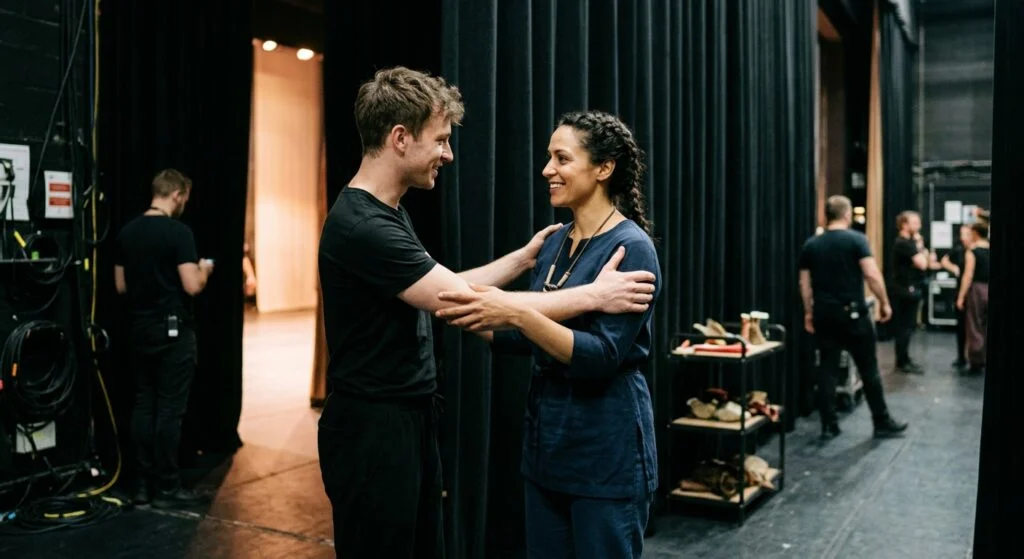
Actors, singers, dancers, musicians, and other performers often hear this expression before going on stage.
Before an Audition
It can show support for someone preparing to audition for a role, team, program, or opportunity.
Before a Presentation
A friend or colleague might use it before an important presentation, although more professional wording may work better in a workplace.
Before a Competition
You can say it before a sporting event, contest, debate, or similar competition.
Before an Exam
Although less traditional, friends sometimes use it casually before an important exam or test.
Before an Interview
The phrase can work among friends, but good luck or you’ve got this may sound more natural in many interview-related messages.
Examples in Real Conversations
Situation: A friend has a theater performance
Example: Break a leg tonight. You’ve worked hard for this.
Meaning: You are wishing your friend success and showing confidence in their performance.
Situation: Someone has an audition
Example: Your audition is tomorrow. Break a leg.
Meaning: You are giving them a casual good-luck message.
Situation: A classmate has a presentation
Example: You know your material. Break a leg with the presentation.
Meaning: You are encouraging them before an important school task.
Situation: A colleague has a major presentation
Example: Best of luck with the presentation today.
Meaning: You are offering encouragement in a more professional way.
Situation: A friend has a competition
Example: Go for it today. You’ve got this.
Meaning: You are giving confident, energetic encouragement.
Similar Terms and Related Phrases
Several expressions can replace break a leg, but they do not all carry exactly the same tone.
| Phrase | Tone | Typical Use |
|---|---|---|
| Good luck | Neutral and friendly | Almost any situation |
| Best of luck | Warm and polite | Personal or professional situations |
| You’ve got this | Casual and confident | Friends, school, sports, work |
| Go for it | Energetic and encouraging | Competitions and challenging tasks |
| Wishing you the best | Warm and polite | Personal or professional messages |
| Knock them dead | Playful and informal | Performances or presentations |
| Give it your best | Encouraging | Exams, competitions, presentations |
| You’ll do great | Positive and supportive | Friends, classmates, colleagues |
| All the best | Polite and versatile | Messages, emails, and conversations |
| Make it a great one | Casual and positive | General encouragement |
When You Should Use It
Break a leg works best when the relationship and situation feel casual enough for an idiomatic expression.
Use it when:
- A friend has a performance.
- Someone has an audition.
- A classmate has an important presentation.
- A performer is about to go on stage.
- Someone you know has a competition.
- You want a playful alternative to good luck.
- The recipient understands common English idioms.
It can be especially natural in theater and performing arts conversations.
When You Should Avoid It
The expression does not fit every situation.
Consider another phrase if:
- You are writing a highly formal business email.
- The recipient may not understand English idioms.
- You need to communicate very clearly and directly.
- The situation involves a serious or sensitive matter.
- You are speaking to someone who may interpret the phrase literally.
In a professional setting, best of luck, wishing you success, or I hope it goes well can sound clearer.
Is It Formal or Informal?
Break a leg is generally informal.
It works well in:
- Casual conversations
- Text messages
- Group chats
- Friendly emails
- Social media comments
- Messages between classmates
- Conversations among colleagues who know each other well
It may feel too casual for:
- Formal business correspondence
- Official announcements
- Academic writing
- Formal client communication
- Serious professional documents
For those situations, choose wording such as:
- Wishing you success
- Best of luck
- I wish you all the best
- I hope everything goes well
- Wishing you the very best with your presentation
Common Misunderstandings
The biggest misunderstanding comes from the literal wording.
Someone unfamiliar with the idiom might initially wonder why a person would mention breaking a leg before an important event. In normal English conversation, however, the expression has a positive meaning.
Another possible issue involves cultural or language differences. Not every English learner knows this idiom, so a straightforward phrase such as good luck may communicate your intention more clearly.
Context also matters. If someone says break a leg in a clearly supportive conversation before a performance, the phrase almost certainly means good luck.
USA and Tier 1 Country Usage
Break a leg is widely recognizable in English-speaking environments, particularly among people familiar with theater and performing arts.
In the United States, it commonly appears around performances, auditions, and other events where someone wants to wish another person success. Speakers in the UK, Canada, Australia, and other English-speaking countries may also recognize it.
Usage can vary by age, profession, and social group. Some people prefer straightforward expressions such as good luck, while others enjoy traditional idioms.
If you are unsure whether the recipient knows the phrase, good luck remains the clearest choice.
Quick Reference Table
| Context | What It Means | Tone | Best Use | Avoid If |
|---|---|---|---|---|
| Theater performance | Good luck | Traditional, informal | Actors and performers | Recipient does not know the idiom |
| Audition | Hope you succeed | Friendly | Friends and performers | Formal communication |
| School presentation | Hope it goes well | Casual | Classmates and friends | Formal academic writing |
| Competition | Do your best | Encouraging | Friends and teammates | Serious formal messages |
| Job interview | Hope you succeed | Casual | Friends and family | Formal workplace communication |
| Professional email | Good wishes | Informal | Familiar colleagues | Client or official correspondence |
| Text message | Good luck | Friendly | Casual conversations | Situations requiring direct wording |
| Social media comment | Encouragement | Casual | Friends and followers | Formal announcements |
Conclusion
Other ways to say break a leg give you more flexibility when you want to wish someone success. Good luck, best of luck, you’ve got this, go for it, and wishing you the best all communicate encouragement while fitting different situations.
Break a leg remains a familiar informal expression, especially before performances and auditions. Its literal wording can sound strange to someone unfamiliar with the idiom, so a simpler phrase may work better in formal or cross-cultural communication. Choose the expression based on your relationship with the person, the event, and the tone you want your message to have.
FAQs
What does break a leg mean in text?
Break a leg means good luck in text messages. People usually send it before an important event such as a performance, audition, competition, presentation, or other challenging occasion.
What does break a leg mean in texting?
In texting, break a leg is a casual way to encourage someone and wish them success. It does not literally mean that you want the person to get hurt.
Is break a leg rude?
No, break a leg is generally not rude. It is a friendly idiom used to wish someone good luck, although a person unfamiliar with the expression may misunderstand the wording.
Can I use break a leg in a professional message?
You can use it with a colleague you know well, especially in a casual workplace conversation. For formal emails, best of luck or wishing you success usually sounds more appropriate.
What is the difference between break a leg and good luck?
Both expressions communicate positive wishes, but good luck has a direct meaning and works in almost any situation. Break a leg is an informal idiom that people often associate with performances and auditions.
Is break a leg formal or informal?
Break a leg is informal. It fits casual conversations, texts, group chats, and friendly messages better than formal business or academic writing.
What can I say instead of break a leg?
You can say good luck, best of luck, you’ve got this, go for it, you’ll do great, give it your best, or wishing you the best, depending on the situation and tone.