Introduction
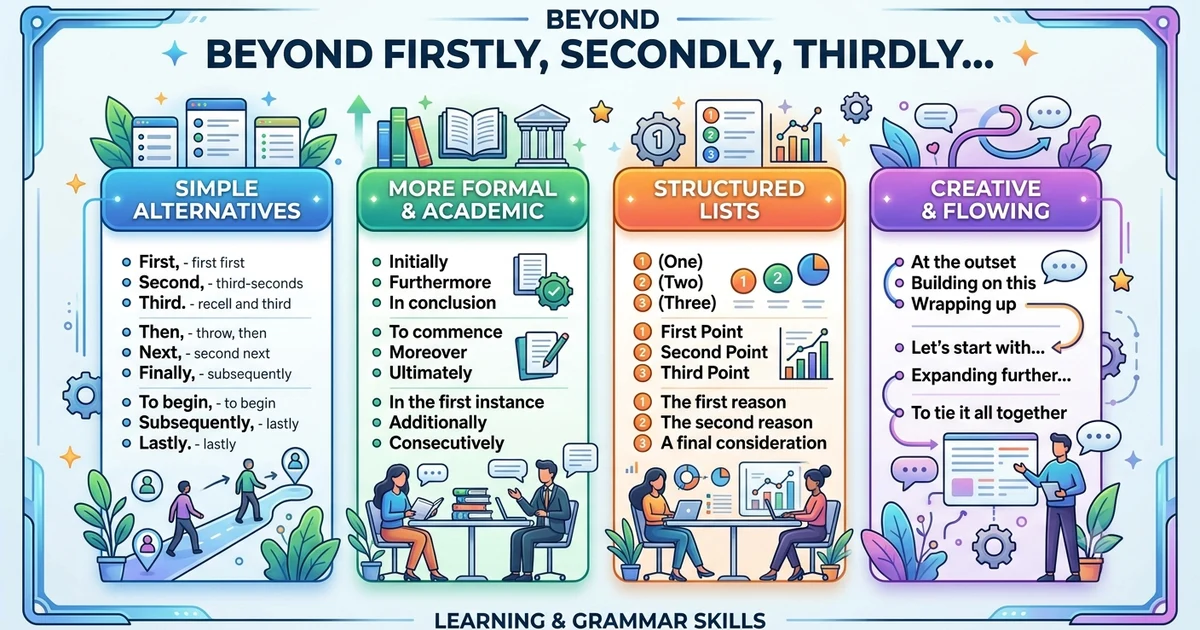
Looking for other ways to say firstly, secondly, thirdly without making your writing sound repetitive or overly formal? Sequencing words help readers follow your ideas, but using the same pattern throughout an essay, article, presentation, or report can make your writing feel mechanical. Fortunately, you can use natural alternatives such as to begin with, next, then, after that, another point is, moving on, finally, and lastly. You can also create smoother transitions by connecting ideas directly instead of numbering every point. In this guide, you’ll discover other ways to say firstly, secondly, thirdly, with practical examples for essays, academic writing, professional documents, presentations, and everyday communication. You’ll learn which alternatives work best when introducing your first idea, adding another point, continuing a sequence, or presenting your final point. These options can help you organize your thoughts clearly while making your writing feel more natural, varied, and engaging.
Quick Answer
Other ways to say firstly secondly thirdly are transition words and phrases used to show order in writing. Instead of repeating those formal markers, writers use alternatives like first, next, then, after that, following that, and finally. These help make writing clearer, more natural, and easier to read in both formal and informal communication.
TL;DR
- Meaning: Words used to show sequence or order of ideas
- Tone: Formal, neutral, or casual depending on choice
- Use: Essays, emails, reports, presentations, instructions
- Purpose: Avoid repetition and improve writing flow
- Best result: Clear, natural, reader-friendly structure
What Other Ways to Say Firstly Secondly Thirdly Means
This phrase refers to alternative transition words that help structure ideas in order. Instead of repeating firstly, secondly, and thirdly, writers use flexible connectors that guide readers through points smoothly.
These alternatives are important because they:
- Improve readability
- Reduce repetition
- Match tone to audience
- Make writing feel natural
- Help organize long explanations
In modern English writing, especially online content and professional communication, simple sequencing words are preferred over rigid numbering language.
Why Writers Actively Search for These Alternatives
There are several real writing problems behind this search.
1. Repetition problem
Using firstly, secondly, thirdly in every paragraph feels robotic.
2. Modern writing style shift
Contemporary English prefers:
- first
- next
- then
instead of formal numbering words.
3. SEO and content writing needs
Online content must:
- Flow naturally
- Keep readers engaged
- Avoid stiff academic tone
4. Spoken English influence
People rarely say firstly, secondly in real speech.
5. Readability improvement
Simple transitions improve comprehension speed.
30 Other Ways to Say Firstly Secondly Thirdly
Below is a structured list of real alternatives used in natural writing.
How to Choose the Right Sequencing Words
The best sequencing word depends on the relationship between your ideas and the tone of your writing. First and next work well when you want a simple, natural flow. For formal writing, expressions such as at the outset or subsequently can add a more structured tone. If you are writing casually, first off or then may sound more comfortable.
You do not need to use a different transition for every sentence. Choose words that help the reader understand how one idea connects to the next. Clear and natural transitions usually work better than complicated expressions that draw attention away from your main point.
SECTION 1: FIRST POINT OPENERS
These replace firstly and introduce the first idea.
- First
- To begin with
- First of all
- First and foremost
- To start with
- In the first place
- At the outset
- In the beginning
- First off
- For starters
- Initially
- Primarily
These are widely used in essays, emails, and explanations.
SECTION 2: MOVING TO NEXT POINT
These replace secondly and help continue flow.
- Next
- Then
- After that
- Following that
- Subsequently
- Moving on
- To continue
- In the next step
- Thereafter
- In turn
- Following this
- At that point
These are the most common modern replacements in digital writing.
SECTION 3: MIDDLE SEQUENCE EXPRESSIONS
Used when multiple points exist between start and end.
- Second
- Third
- In the second place
- In the third place
- Afterward
- Later on
- Meanwhile
- At the same time
- In addition
- As another point
- Additionally
- On top of that
These help expand structured arguments.
SECTION 4: FINAL OR CLOSING POINTS
These replace thirdly or concluding markers.
- Finally
- Last but not least
- In conclusion
- To conclude
- Ultimately
- Lastly
- To finish
- At last
- As a final point
- In the end
- To wrap up
- Overall
These are commonly used in essays and presentations.
How These Words Work in Real Writing
These transitions are used across different writing formats.
Academic writing
- Essays
- Research papers
- Assignments
Professional writing
- Business emails
- Reports
- Proposals
- Project documents
Digital content
- Blogs
- SEO articles
- Tutorials
- YouTube scripts
Everyday communication
- Instructions
- Messages
- Explanations
Tone Differences Explained Clearly
Each alternative changes tone slightly.
Formal tone
- At the outset
- Subsequently
- In conclusion
- In the second place
Neutral tone
- First
- Next
- Then
- After that
Casual tone
- First off
- For starters
- Moving on
- To start with
Choosing the right tone matters more than following rigid grammar rules.
Alternatives That Sound More Natural in Modern Writing
Many writers use firstly, secondly, and thirdly because they learned these expressions in school. While they remain grammatically acceptable, they can make some types of writing sound overly structured when used repeatedly. Simpler alternatives such as first, next, then, and finally often create a smoother reading experience.
This does not mean you should completely avoid formal sequencing words. The goal is to create variety while keeping your meaning clear. For example, a business report may benefit from structured transitions, while a blog post may sound more natural when ideas flow through simple connectors and descriptive sentences.
Real-Life Examples (Very Important Section)
Example 1: Work email
Situation: Explaining a task plan
Example: To begin with, we review the requirements. Next, we assign responsibilities. Finally, we deliver the report.
Meaning: Clear professional structure
Example 2: Academic essay
Situation: Formal argument
Example: First and foremost, the issue must be defined. Subsequently, data is analyzed. In conclusion, recommendations are made.
Meaning: Logical academic flow
Example 3: Daily conversation
Situation: Explaining steps to a friend
Example: First, I checked the schedule. Then I booked the ticket. After that, I confirmed everything.
Meaning: Natural casual sequence
Example 4: Tutorial or guide
Situation: Step-by-step instruction
Example: First, open the app. Next, log in. Then, select your profile. Finally, save changes.
Meaning: Instructional clarity
Similar Writing Structures You Should Know
These are related patterns used instead of numbering:
- Step one, step two, step three
- Chronological connectors
- Sequential markers
- Ordered transitions
- Logical flow phrases
All of them serve the same purpose: guiding readers through structured thinking.
How to Create Better Flow Without Transition Words
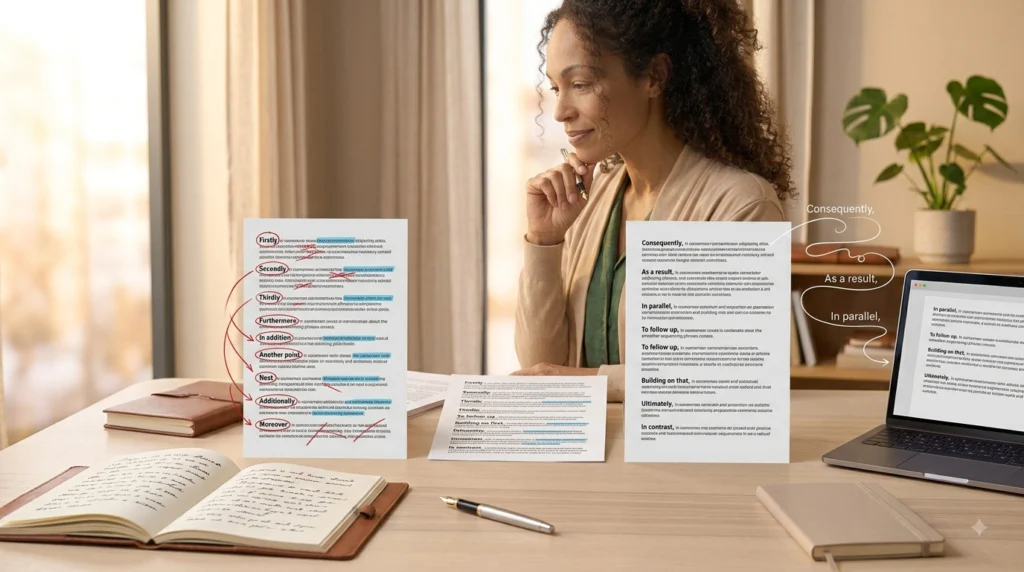
You do not always need a sequencing word to show that one point follows another. Sometimes the sentence structure itself can create a clear connection. Instead of writing First, we reviewed the data. Secondly, we compared the results, you could write We first reviewed the data before comparing the results. This approach keeps the sequence clear without repeatedly announcing each point.
Another useful technique is to connect ideas through time, cause, or progression. Words such as before, afterward, while, once, and meanwhile can show relationships naturally. Using a mixture of these structures can make essays, articles, reports, and presentations feel more polished without relying on the same transition pattern throughout.
When You Should Use These Alternatives
Use them when:
- Writing structured content
- Explaining processes
- Creating tutorials
- Writing essays or reports
- Presenting ideas clearly
- Organizing long explanations
They improve clarity and help readers follow your logic.
When You Should Avoid Overusing Them
Avoid them when:
- Writing very short messages
- Informal chat already feels natural
- Order is obvious without explanation
- Creative writing needs flow instead of structure
Too many transitions can make writing feel slow or forced.
Is It Formal or Informal?
These transitions work in both contexts:
Formal writing
- Subsequently
- At the outset
- In conclusion
Informal writing
- First off
- Then
- Next
Balanced writing
- First
- After that
- Finally
Modern English prefers balance over strict formal rules.
Common Mistakes Writers Make
Many people misuse sequencing words.
Mistake 1: Overusing firstly
Every paragraph starts the same way.
Mistake 2: Too formal in casual writing
Using “subsequently” in simple conversation.
Mistake 3: Ignoring flow
Using transitions without logical connection.
Mistake 4: Repetition
Using same structure repeatedly instead of variation.
USA and Tier 1 Country Usage
In the USA, UK, Canada, and Australia:
- First, next, then is more common than firstly, secondly
- Business writing prefers clarity over formality
- Academic writing allows structured transitions but avoids repetition
- Online content prefers conversational flow
Modern English writing is reader-focused, not rule-heavy.
Quick Reference Table
| Context | What It Means | Tone | Best Use | Avoid If |
|---|---|---|---|---|
| Academic writing | Structured argument | Formal | Essays, research | Casual chat |
| Business writing | Clear progression | Professional | Emails, reports | Slang use |
| Instructions | Step-by-step guide | Neutral | Tutorials | Creative writing |
| Casual writing | Simple flow | Relaxed | Messages, blogs | Formal documents |
Conclusion
Other ways to say firstly secondly thirdly are transition words that help organize ideas in a more natural and readable way. Instead of repeating the same structure, writers can use alternatives like first, next, then, and finally. The goal is not complexity but clarity, smooth flow, and better reader experience. Choosing the right transition depends on tone, context, and audience.
FAQs
What does other ways to say firstly secondly thirdly mean?
It refers to alternative words used to show order in writing instead of using firstly, secondly, and thirdly.
What are the best alternatives?
First, next, then, after that, and finally are the most natural options.
Is firstly secondly thirdly still correct?
Yes, but modern writing prefers simpler transitions for better readability.
Can I use these in formal writing?
Yes, especially words like subsequently, at the outset, and in conclusion.
Why do writers avoid firstly secondly thirdly?
Because it can sound repetitive and less natural in modern English.
What is the easiest structure to use?
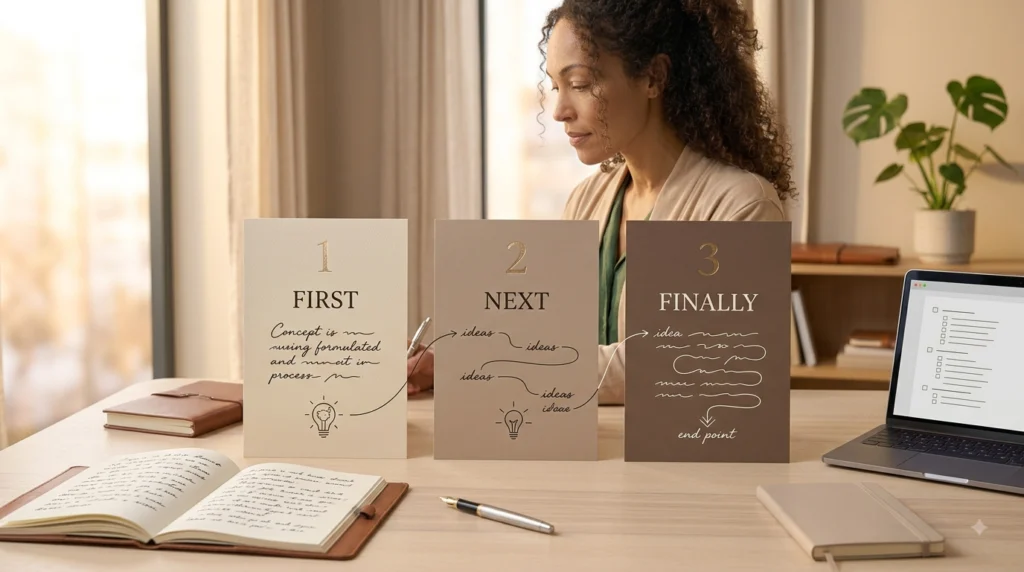
First → Next → Then → Finally is the simplest and most effective flow.