Sometimes, saying I don’t care can sound too blunt, even if you simply want to show that you have no preference or that something does not matter to you. Many people search for better alternatives because the right wording depends on the situation, your relationship with the other person, and the tone you want to convey.
This guide explains what the phrase means, when it sounds rude, and better ways to express the same idea in casual conversations, text messages, social media, and professional settings.
Quick Answer
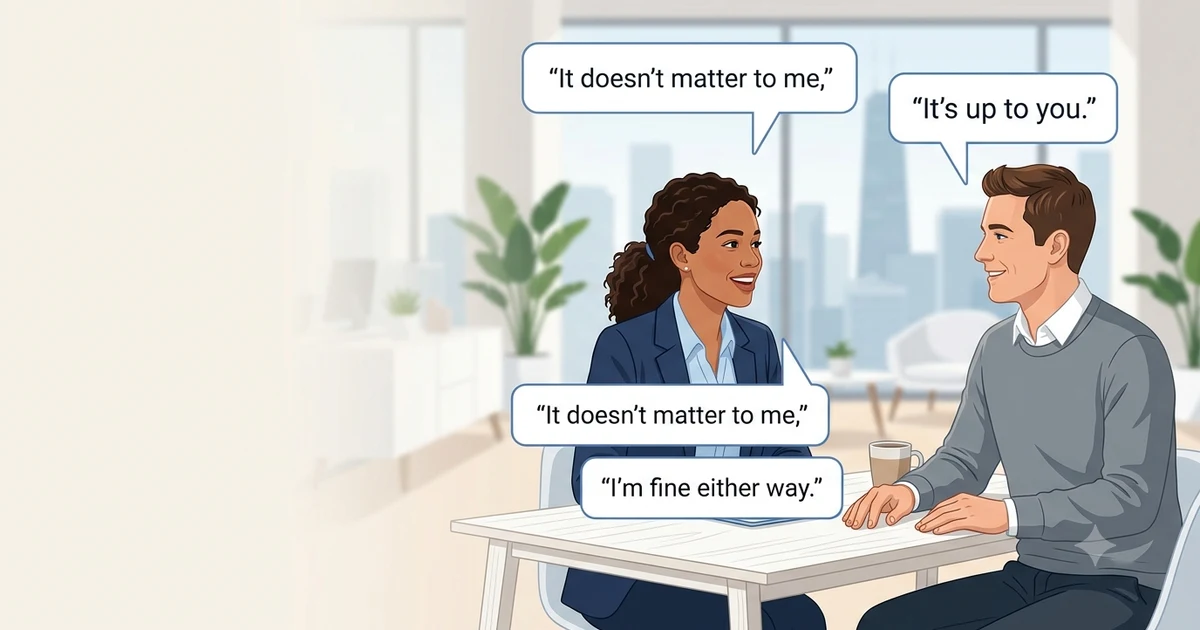
Other ways to say I don’t care include It doesn’t matter to me, I’m fine either way, I’m okay with whatever you decide, No preference, and It’s up to you. The best choice depends on whether you want to sound polite, neutral, casual, or direct.
TL;DR
- Meaning: You are not concerned about the outcome.
- Tone: Can sound neutral, polite, or rude depending on wording.
- Common use: Texting, conversations, and online chats.
- Where it appears: Daily conversations, social media, and casual messages.
- Formal or informal: The original phrase is usually informal.
What It Means
The phrase simply tells someone that you have no interest, preference, or concern about a particular topic or decision.
Sometimes it means you genuinely have no opinion. In other situations, it may show frustration, boredom, or emotional distance. Because people often hear it as dismissive, choosing a softer alternative usually leads to better communication.
Basic Explanation
Unlike an abbreviation or slang term, this is a common English phrase.
People use it to express different ideas, including:
- No preference between two options.
- Lack of interest.
- Acceptance of another person’s decision.
- Emotional detachment.
- Frustration during an argument.
The surrounding conversation and your tone of voice change how people understand it.
Better Ways to Say It
Here are some natural alternatives.
| Alternative | Best For | Tone |
|---|---|---|
| It doesn’t matter to me | Everyday conversations | Neutral |
| I’m fine either way | Decisions | Friendly |
| It’s up to you | Letting someone choose | Polite |
| I have no preference | Professional settings | Professional |
| Either option works for me | Meetings | Professional |
| I’m okay with whatever you decide | Friends and family | Warm |
| Whatever works best | Teamwork | Cooperative |
| I’m good with either choice | Casual conversations | Relaxed |
| You can decide | Giving someone control | Polite |
| I don’t mind | Everyday use | Friendly |
| No strong opinion | Discussions | Neutral |
| I’m easy | Informal conversations | Casual |
| I’m flexible | Work or planning | Professional |
| Any option is fine | Scheduling | Polite |
| I’ll go with your choice | Collaborative situations | Friendly |
| It makes no difference to me | Neutral discussions | Calm |
| I can work with either | Workplace | Professional |
| You pick | Friends | Casual |
| I trust your judgment | Respectful situations | Positive |
| I’m happy with whatever | Family and friends | Warm |
How People Use It in Texting and Online Conversations
In texting, people often choose shorter and softer replies instead of saying the original phrase.
Examples include:
- Either is fine.
- Your choice.
- I’m good either way.
- No preference.
- Works for me.
- Up to you.
These responses keep the conversation friendly while avoiding an unnecessarily harsh tone.
Tone and Emotional Meaning
The meaning changes based on delivery.
Neutral
You simply have no preference.
Polite
You want someone else to decide.
Dismissive
You no longer want to discuss the topic.
Frustrated
You feel tired of arguing.
Sarcastic
You pretend not to care while actually feeling upset.
Because tone matters, many people misunderstand this phrase in text messages where facial expressions and voice are missing.
Common Situations Where It Appears
People often use this type of response when:
- Choosing a restaurant.
- Picking a movie.
- Deciding meeting times.
- Planning a vacation.
- Discussing dinner.
- Replying in group chats.
- Commenting on social media.
- Ending an argument.
- Giving someone freedom to choose.
- Showing that either option works.
Examples in Real Conversations
Situation
Friends choosing dinner.
Example
A: Pizza or burgers?
B: I’m fine either way.
Meaning
Either choice is acceptable.
Situation
Office meeting.
Example
A: Which presentation template should we use?
B: I have no preference.
Meaning
Both options work equally well.
Situation
Family plans.
Example
A: Should we leave now or after lunch?
B: It’s up to you.
Meaning
The other person can decide.
Situation
Text message.
Example
A: Blue shirt or black shirt?
B: Either works for me.
Meaning
No strong preference.
Situation
Group chat.
Example
A: Saturday or Sunday?
B: Whatever works best for everyone.
Meaning
The group’s convenience matters most.
Similar Terms and Related Phrases
| Phrase | Difference |
|---|---|
| I don’t mind | Softer and more polite |
| No preference | More professional |
| It’s up to you | Gives the decision away |
| Whatever works | Cooperative |
| Fine by me | Casual approval |
| Either works | Shows flexibility |
| Doesn’t matter to me | Neutral and common |
| Your choice | Lets the other person decide |
When You Should Use It
Good situations include:
- Casual conversations with friends.
- Family decisions.
- Group planning.
- Choosing between similar options.
- Showing flexibility.
- Letting another person decide.
A softer alternative often creates a better impression than using the direct phrase.
When You Should Avoid It
Avoid saying it when:
- Someone shares personal feelings.
- A coworker asks for thoughtful feedback.
- A customer needs your opinion.
- Your partner wants emotional support.
- You are writing a professional email.
- You want to sound respectful during a disagreement.
In these situations, people may think you are dismissing their concerns.
Is It Formal or Informal?
The original phrase is mostly informal.
For work, school, or business communication, better choices include:
- I have no preference.
- Either option works for me.
- I’m happy to follow your recommendation.
- I’m flexible.
- I’m comfortable with either approach.
These sound more respectful and collaborative.
Common Misunderstandings
People sometimes believe the phrase always means someone feels angry.
That is not always true.
A person may simply have no preference. Another person may use it because they feel frustrated or emotionally tired.
The surrounding conversation usually explains the real meaning.
Usage in the USA and Other English-Speaking Countries
People in the United States, Canada, the United Kingdom, Australia, and New Zealand understand the phrase immediately.
However, many native English speakers avoid using it in polite conversations because it can sound cold. Instead, they often choose softer expressions that keep the conversation positive and respectful.
Quick Reference Table
| Context | What It Means | Tone | Best Use | Avoid If |
|---|---|---|---|---|
| Casual text | No preference | Relaxed | Friends | Someone is upset |
| Workplace | No strong opinion | Professional | Meetings | Giving important feedback |
| Family | Let others choose | Friendly | Planning | Emotional conversations |
| Social media | Lack of interest | Neutral | Casual comments | Serious discussions |
| Arguments | Emotional distance | Can sound rude | Rarely | Resolving conflict |
Conclusion
Knowing other ways to say I don’t care helps you communicate more clearly without sounding rude. While the original phrase works in casual situations, softer alternatives such as It doesn’t matter to me, I’m fine either way, or I have no preference usually create a better impression. Choosing the right expression depends on your relationship, the setting, and the message you want to send.
FAQs
What does other ways to say I don’t care mean?
It refers to alternative phrases that express no preference or lack of concern in a more polite or suitable way.
Is I don’t care rude?
It can sound rude if someone expects empathy or a thoughtful opinion. Tone and context make a big difference.
What is the best professional alternative?
I have no preference, Either option works for me, and I’m flexible are professional choices.
What can I say instead in a text message?
You can use I’m fine either way, Your choice, Works for me, or It doesn’t matter to me.
Is I don’t care formal or informal?
It is generally informal and works better in casual conversations than in business communication.
What is the difference between I don’t care and I don’t mind?
I don’t mind usually sounds friendlier and shows willingness, while I don’t care may sound more dismissive.
Can I use this phrase on social media?
Yes, but remember that written messages lack tone. A softer alternative often prevents misunderstandings.
Other Ways to Say I Understand Your Frustration Professionally