
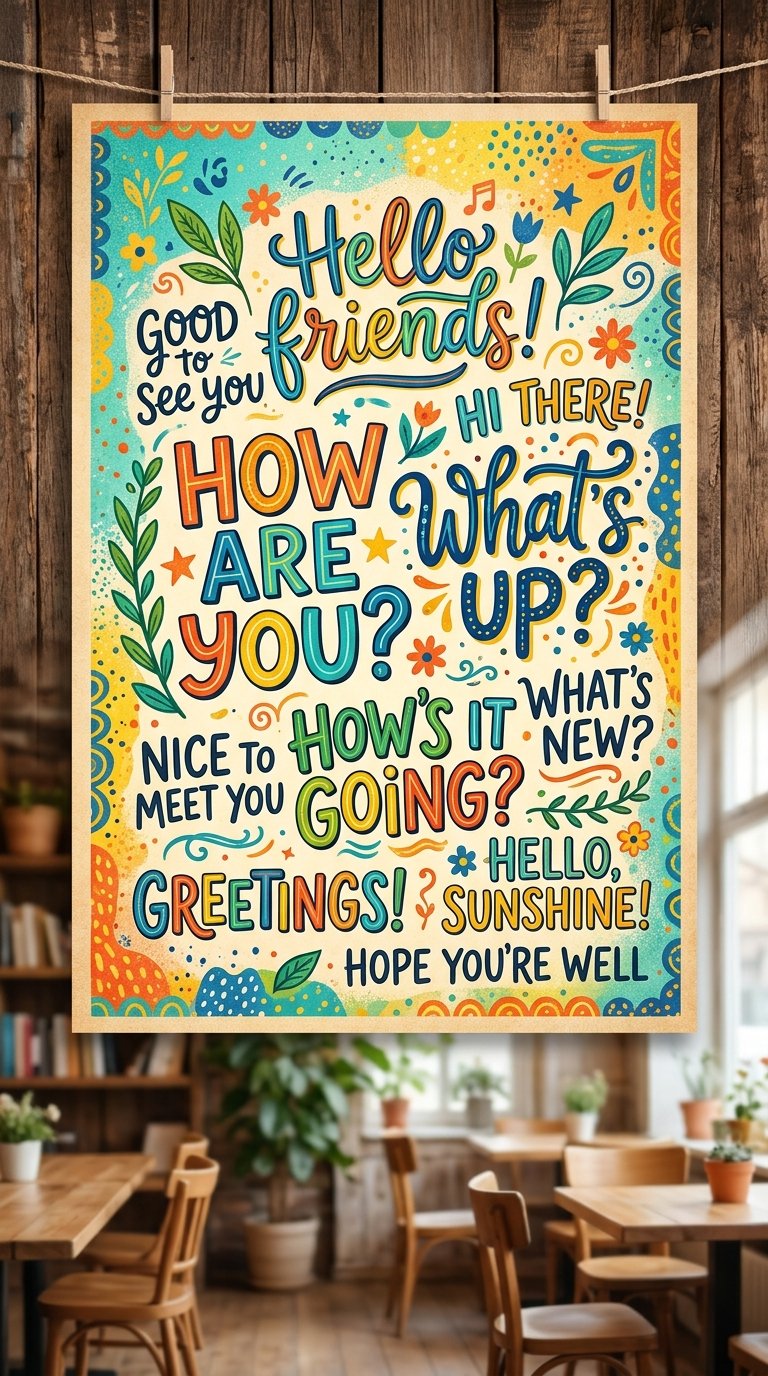
Greeting someone with How are you works in almost every situation, but using the same phrase every time can feel repetitive. Whether you are talking to a friend, coworker, family member, or someone you just met, there are many natural ways to ask how someone is doing.
This guide shares the best other ways to say how are you, explains when to use each one, and includes real-life examples to help you sound more natural in everyday conversations.
Quick Answer
There are many friendly alternatives to How are you, such as How’s it going, What’s up, How have you been, How’s everything, and How are things. The best choice depends on the situation, your relationship with the other person, and whether the conversation is casual, professional, or formal.
TL;DR
- How are you is a common greeting used to ask about someone’s well-being.
- You can replace it with casual, formal, or friendly alternatives.
- Different phrases fit different situations, from texting to business meetings.
- Most alternatives are common in the United States, Canada, the UK, and Australia.
- Choose the greeting based on your relationship and the setting.
What Other Ways to Say How Are You Means
Asking someone how they are is one of the most common ways to start a conversation in English. It shows politeness, friendliness, and interest in the other person’s well-being.
While How are you is always appropriate, English speakers often use different expressions to make conversations feel warmer, more relaxed, or more personal.
For example:
- Friends often prefer casual greetings.
- Coworkers may use professional but friendly alternatives.
- Family members usually ask in a more caring or personal way.
- People texting often use shorter and more conversational phrases.
Knowing a variety of greetings helps your conversations sound more natural instead of repetitive.
Why People Look for Alternatives
There are several reasons people choose a different greeting instead of saying How are you every time.
Some common reasons include:
- To sound more natural in conversation.
- To avoid repeating the same phrase.
- To match a casual or professional setting.
- To build a friendlier connection.
- To make small talk feel more genuine.
- To fit texting or online conversations.
- To show extra care or interest.
A simple change in wording can make a conversation feel more engaging without changing the meaning.

50+ Other Ways to Say How Are You
The best alternative depends on who you’re speaking with. Below are some of the most natural options grouped by tone and situation.
Casual Alternatives
These work well with friends, classmates, siblings, and people you know well.
| Alternative | Best Used When | Example |
|---|---|---|
| How’s it going? | Everyday conversation | How’s it going? Haven’t seen you in a while. |
| What’s up? | Very casual | What’s up? Anything fun happening today? |
| How are things? | Friendly conversations | How are things with your new apartment? |
| What’s new? | Catching up | What’s new since we last talked? |
| How’ve you been? | After some time apart | How’ve you been since graduation? |
| How’s everything? | General greeting | How’s everything at work? |
| How’s life? | Friends and family | How’s life these days? |
| What’s going on? | Casual chat | What’s going on with you lately? |
| How’s your day going? | During the day | How’s your day going so far? |
| What’s happening? | Informal conversation | Hey, what’s happening? |
Friendly Alternatives
These sound warm and welcoming without being too casual.
| Alternative | Best Used When | Example |
|---|---|---|
| Hope you’re doing well | Email or chat | Hope you’re doing well today. |
| How have you been doing? | Catching up | How have you been doing lately? |
| Nice to see you. How have you been? | Meeting again | Nice to see you. How have you been? |
| Everything going okay? | Showing concern | Everything going okay at work? |
| Are you doing well? | Caring conversations | Are you doing well these days? |
| How’s your week been? | Weekly check-in | How’s your week been so far? |
| How are things going? | Friendly conversation | How are things going with your classes? |
| How’s your family? | Personal conversation | How’s your family doing? |
| Been keeping busy? | Casual catch-up | Been keeping busy lately? |
| How’s your evening going? | Evening greeting | How’s your evening going? |
Professional Alternatives
These work well in workplaces, meetings, and business emails.
| Alternative | Best Used When | Example |
|---|---|---|
| I hope you’re doing well | Professional email | I hope you’re doing well. |
| How are things going? | Workplace chat | How are things going with the project? |
| How have you been? | Colleagues | How have you been since we last met? |
| I trust you’re doing well | Formal email | I trust you’re doing well this week. |
| How is everything on your end? | Business communication | How is everything on your end? |
| How are things progressing? | Projects | How are things progressing with the report? |
| How’s your week going? | Team conversations | How’s your week going? |
| Is everything going smoothly? | Work discussions | Is everything going smoothly with the rollout? |
| How have things been? | Professional networking | How have things been since the conference? |
| Hope your day is going well | Email opener | Hope your day is going well. |
Formal Alternatives
These are suitable for respectful conversations or speaking with someone you do not know well.
| Alternative | Best Used When | Example |
|---|---|---|
| How do you do? | Formal introductions | How do you do? It’s a pleasure to meet you. |
| I hope all is well | Formal correspondence | I hope all is well with you. |
| I trust all is well | Business writing | I trust all is well. |
| How have you been keeping? | Polite conversation | How have you been keeping recently? |
| I hope everything is going well | Formal email | I hope everything is going well for you. |
| How is everything? | Respectful greeting | How is everything at your office? |
| I hope life has been treating you well | Warm but formal | I hope life has been treating you well. |
| May I ask how you’ve been? | Respectful conversation | May I ask how you’ve been? |
Caring Alternatives
Use these when you genuinely want to check on someone’s well-being.
| Alternative | Best Used When | Example |
|---|---|---|
| Are you okay? | Concern | Are you okay? You seem tired today. |
| How are you holding up? | Difficult situations | How are you holding up after everything? |
| Is everything okay? | Gentle concern | Is everything okay at home? |
| How have you been feeling? | Health or recovery | How have you been feeling lately? |
| Are things getting better? | Ongoing challenge | Are things getting better now? |
| How’s everything been? | Personal check-in | How’s everything been since we talked? |
| How are you managing? | Stressful periods | How are you managing with your new schedule? |
| You doing alright? | Friendly concern | You doing alright today? |
Fun and Playful Alternatives
These greetings work best with close friends and people who enjoy casual humor.
| Alternative | Best Used When | Example |
|---|---|---|
| What’s good? | Friends | What’s good today? |
| What’s cooking? | Lighthearted chat | What’s cooking this weekend? |
| What’s the latest? | Catching up | What’s the latest with you? |
| What’s the vibe? | Younger audiences | What’s the vibe today? |
| How’s the world treating you? | Friendly humor | How’s the world treating you lately? |
| Still surviving? | Light joke | Still surviving the Monday meetings? |
| Living the dream? | Casual humor | Living the dream today? |
| What’s keeping you busy? | Casual catch-up | What’s keeping you busy these days? |
| What’s the story? | Friendly greeting | What’s the story with your new job? |
| How’s your adventure going? | Someone traveling or trying something new | How’s your adventure going so far? |
Choosing the Right Greeting
Before picking an alternative, think about three simple questions:
- How well do you know the person?
- Is the conversation casual or professional?
- Do you want to sound friendly, formal, caring, or playful?
For example:
- Meeting your manager: I hope you’re doing well.
- Texting your best friend: What’s up?
- Seeing an old friend: How’ve you been?
- Checking on a family member: How are you holding up?
- Greeting a neighbor: How’s everything?
Using the right greeting makes conversations feel more natural and helps create a stronger connection with the person you’re speaking to.
How People Use These Greetings in Texting and Online Conversations
The way people greet each other in text messages is often different from face-to-face conversations. Texting tends to be shorter, more casual, and quicker. Instead of typing a full greeting, many people use simple phrases that feel natural in chat.
Here are some of the most common greetings you’ll see in texts, messaging apps, and social media.
| Greeting | Common Platform | Tone |
|---|---|---|
| What’s up? | Text, Snapchat, Instagram | Very casual |
| How’s it going? | Text, Messenger | Friendly |
| How’ve you been? | Text after a long time | Warm |
| How’s your day going? | Text or work chat | Friendly |
| What’s new? | Text and social media | Casual |
| Everything good? | Text | Caring |
| You doing okay? | Text | Supportive |
| How are things? | Email or messaging apps | Neutral |
In casual texting, people often shorten these greetings even more.
Examples:
Person A: Hey, what’s up?
Person B: Not much. Just finished work.
Person A: How’s your day going?
Person B: Pretty good. Just getting ready for dinner.
Person A: Been keeping busy?
Person B: Yeah, work has been hectic lately.
These shorter greetings help conversations start naturally without sounding overly formal.
Tone and Emotional Meaning
Although many greetings ask the same basic question, each one creates a slightly different feeling. Choosing the right tone helps your conversation feel more genuine.
Friendly
These greetings sound warm and welcoming.
Examples:
- How’s it going?
- How are things?
- How’s everything?
- How’ve you been?
Best for:
- Friends
- Neighbors
- Coworkers
- New acquaintances
Casual
These are relaxed and common among younger speakers and close friends.
Examples:
- What’s up?
- What’s happening?
- What’s good?
- What’s new?
Best for:
- Friends
- Siblings
- Group chats
- Social media
Avoid using these in business emails or formal meetings.
Caring
Sometimes you’re asking because you truly want to know how someone is feeling.
Examples:
- Are you okay?
- How are you holding up?
- Is everything okay?
- How have you been feeling?
These greetings show concern rather than simple politeness.
Professional
Professional greetings are polite without sounding stiff.
Examples:
- I hope you’re doing well.
- How are things going?
- Hope your day is going well.
- I trust you’re doing well.
These work well in:
- Emails
- Microsoft Teams
- Slack
- Client meetings
- Workplace chats
Formal
Formal greetings are less common in everyday conversation but still useful in certain situations.
Examples:
- I hope all is well.
- How have you been keeping?
- I trust all is well.
You’ll mostly see these in:
- Business correspondence
- Professional networking
- Formal letters
Common Situations Where These Greetings Fit Best
Different situations call for different greetings. Matching the greeting to the setting helps your conversation feel natural.
Meeting a Friend
Good choices include:
- How’s it going?
- What’s up?
- How’s life?
- What’s new?
Seeing Someone After a Long Time
Try these:
- How’ve you been?
- How have things been?
- Nice to see you. How have you been?
- What’s been new?
Starting a Work Conversation
Professional options include:
- I hope you’re doing well.
- How are things going?
- Hope your week is going well.
- How is everything on your end?
Checking on Someone
Use greetings that show genuine concern.
Examples:
- Are you okay?
- How are you holding up?
- Is everything alright?
- How have you been feeling?
Starting Small Talk
Simple greetings often work best.
Examples:
- How’s your day going?
- How are things?
- What’s happening?
- Everything going well?
Examples in Real Conversations
Seeing greetings in context makes them much easier to use.
Situation: Meeting a coworker Monday morning
Example
Emma: Morning, David. How’s your week going?
David: Pretty good so far. Just catching up on emails.
Meaning
A friendly but professional way to begin a conversation.
Situation: Texting your best friend
Example
Alex: Hey, what’s up?
Jordan: Just watching a movie. You?
Meaning
A casual greeting that starts a relaxed conversation.
Situation: Catching up with an old friend
Example
Lisa: It’s been forever. How’ve you been?
Megan: Really good. I started a new job last month.
Meaning
A warm way to reconnect after time apart.
Situation: Checking on someone
Example
Chris: You doing okay?
Taylor: Thanks for asking. I’ve had a busy week, but I’m doing better.
Meaning
Shows genuine care instead of routine small talk.
Situation: Business email
Example
Hi Sarah,
I hope you’re doing well.
I’m following up regarding our meeting next week.
Meaning
A professional opening that feels polite without being overly formal.
Situation: Greeting a neighbor
Example
Mark: Morning. How are things?
Olivia: Everything’s going well. Thanks for asking.
Meaning
A simple everyday greeting suitable for neighbors and acquaintances.
Similar Greetings and How They Differ
Many English greetings have similar meanings, but they aren’t always interchangeable.
| Greeting | Best Use | Main Difference |
|---|---|---|
| How are you? | Universal | Works almost anywhere. |
| How’s it going? | Casual | More relaxed and conversational. |
| What’s up? | Very casual | Often starts a conversation rather than asking about health. |
| How’ve you been? | Reconnecting | Used after not seeing someone for a while. |
| What’s new? | Catching up | Focuses on recent events. |
| How are things? | Everyday conversation | Broader than asking about a person’s health. |
| How’s life? | Friends and family | More personal and conversational. |
| Everything okay? | Showing concern | Usually asked when something seems wrong. |
Understanding these small differences helps you choose the greeting that matches the moment rather than using the same phrase every time.
When You Should Use These Alternatives
Choosing the right greeting depends on who you’re speaking to and the situation. A phrase that sounds natural with a close friend might feel too casual in a business meeting.
Here are some practical guidelines.
Use casual greetings when:
- Talking with friends.
- Texting family members.
- Chatting with classmates.
- Messaging people on social media.
- Starting an informal conversation.
Good choices include:
- What’s up?
- How’s it going?
- What’s new?
- How’s life?
Use professional greetings when:
- Writing business emails.
- Speaking with clients.
- Meeting coworkers.
- Attending networking events.
- Starting workplace chats.
Good choices include:
- I hope you’re doing well.
- How are things going?
- Hope your day is going well.
- How is everything on your end?
Use caring greetings when:
- Someone has been sick.
- A friend is going through a difficult time.
- You know someone has been stressed.
- You genuinely want to check on someone’s well-being.
Good choices include:
- How are you holding up?
- Are you okay?
- How have you been feeling?
- Is everything okay?
When You Should Avoid Certain Greetings
Not every greeting fits every situation. Using the wrong one can make the conversation feel awkward or less professional.
Avoid very casual greetings when:
- Speaking during a job interview.
- Meeting a client for the first time.
- Writing formal emails.
- Talking to someone in a highly professional setting.
For example, phrases like What’s up? or What’s good? may sound too informal.
Avoid overly formal greetings when:
- Texting close friends.
- Chatting in family group messages.
- Talking with classmates.
- Messaging someone you know well.
For example, I trust all is well may sound overly formal in a casual text.
Avoid playful greetings when someone is dealing with a serious situation.
Instead of saying Still surviving?, choose something more thoughtful, such as How are you holding up?
Matching your greeting to the situation helps conversations feel respectful and natural.
Is It Formal or Informal?
Most alternatives to How are you fall somewhere between casual and professional.
| Greeting | Formality |
|---|---|
| How are you? | Neutral |
| How’s it going? | Informal |
| What’s up? | Very informal |
| What’s new? | Informal |
| How’ve you been? | Neutral |
| How are things? | Neutral |
| I hope you’re doing well | Professional |
| I trust you’re doing well | Formal |
| Are you okay? | Caring and informal |
| How are you holding up? | Caring and informal |
In general:
- Casual greetings work best with people you know well.
- Neutral greetings fit most everyday conversations.
- Professional greetings are ideal for work.
- Formal greetings are best for business correspondence and official communication.
Common Misunderstandings
Although these greetings seem simple, people sometimes misunderstand what they mean.
Thinking every greeting requires a detailed answer
Many greetings are simply polite conversation starters.
For example:
Person A: How’s it going?
Person B: Pretty good. You?
A short reply is perfectly normal.
Assuming What’s up? always asks a serious question
In many English-speaking countries, What’s up? often means Hello rather than Tell me everything that’s happening.
A simple response like Not much or Just relaxing is common.
Using formal greetings with close friends
Very formal expressions can sound distant in casual conversations.
Instead of saying I trust all is well to your best friend, something like How’ve you been? usually sounds more natural.
Forgetting cultural differences
People in different English-speaking countries use slightly different greetings. The meaning stays the same, but some phrases are more common in certain regions.
How These Greetings Are Used in the USA and Other Tier 1 Countries
Most of these alternatives are widely understood across the United States, Canada, the United Kingdom, Australia, and New Zealand. However, some greetings are more popular in certain places.
United States
You’ll hear casual greetings like:
- What’s up?
- How’s it going?
- How are things?
- What’s new?
These are common in daily conversations, schools, workplaces, and social settings.
Canada
Canadian English often favors friendly, polite greetings such as:
- How’s it going?
- How have you been?
- Hope you’re doing well.
- How are things?
United Kingdom
British speakers frequently use greetings like:
- You alright?
- How’s it going?
- How are things?
- How’ve you been?
Keep in mind that You alright? is usually just a greeting rather than a sign that something is wrong.
Australia and New Zealand
Casual conversation is common, so greetings such as these are widely used:
- How’s it going?
- How are things?
- What’s been happening?
- How’s life?
Across all of these countries, choosing a greeting that matches the relationship and setting is more important than the specific words you use.
Quick Reference Table
| Context | What It Means | Tone | Best Use | Avoid If |
|---|---|---|---|---|
| Meeting a friend | Asking how someone is doing | Casual | Friends, classmates | Formal meetings |
| Business email | Polite opening | Professional | Clients, coworkers | Casual texting |
| Catching up | Asking about recent life | Warm | Old friends | First introductions |
| Checking on someone | Showing concern | Caring | Difficult situations | Casual small talk |
| Social media chat | Starting conversation | Relaxed | Friends and online chats | Professional communication |
| Formal letter | Respectful greeting | Formal | Business correspondence | Everyday texting |
Conclusion
Knowing other ways to say how are you helps you communicate more naturally in different situations. Whether you’re texting a friend, greeting a coworker, reconnecting with an old classmate, or checking on a loved one, choosing the right greeting makes your conversation feel more genuine.
The best alternative depends on your relationship with the other person, the setting, and the tone you want to create. Casual phrases like How’s it going and What’s up work well with friends, while professional options such as I hope you’re doing well fit workplace conversations. By using a variety of greetings, you’ll sound more confident, friendly, and natural in everyday English.
FAQs
What are the best other ways to say how are you?
Some of the most common alternatives include How’s it going, How are things, What’s up, How’ve you been, What’s new, and How’s everything. The best choice depends on the situation and your relationship with the other person.
Can I use What’s up in professional messages?
Generally, no. What’s up is very casual and works best with friends or people you know well. For work, choose greetings such as I hope you’re doing well or How are things going?
Is How’s it going more casual than How are you?
Yes. How’s it going sounds more relaxed and conversational, making it a popular choice in everyday speech and casual texting.
Which greeting should I use after not seeing someone for a long time?
How’ve you been and How have things been are excellent choices because they naturally invite the other person to share recent updates.
Is it okay to use different greetings in emails?
Yes. Professional emails often begin with greetings like I hope you’re doing well, Hope your week is going well, or I trust you’re doing well, depending on the level of formality.
Do these greetings have the same meaning?
They all ask about someone’s well-being, but they differ slightly in tone. Some are casual, some are caring, and others are more suitable for professional or formal communication.
Which greeting is the most versatile?
How are you remains the most versatile option because it works in almost every situation. However, using different alternatives can make your conversations feel more natural and engaging.