When you need to reassure someone that they will receive updates, the phrase we will keep you updated is clear, but it can sound repetitive in emails, business messages, customer service replies, and project communications. Choosing the right alternative helps you sound professional, friendly, confident, and considerate.
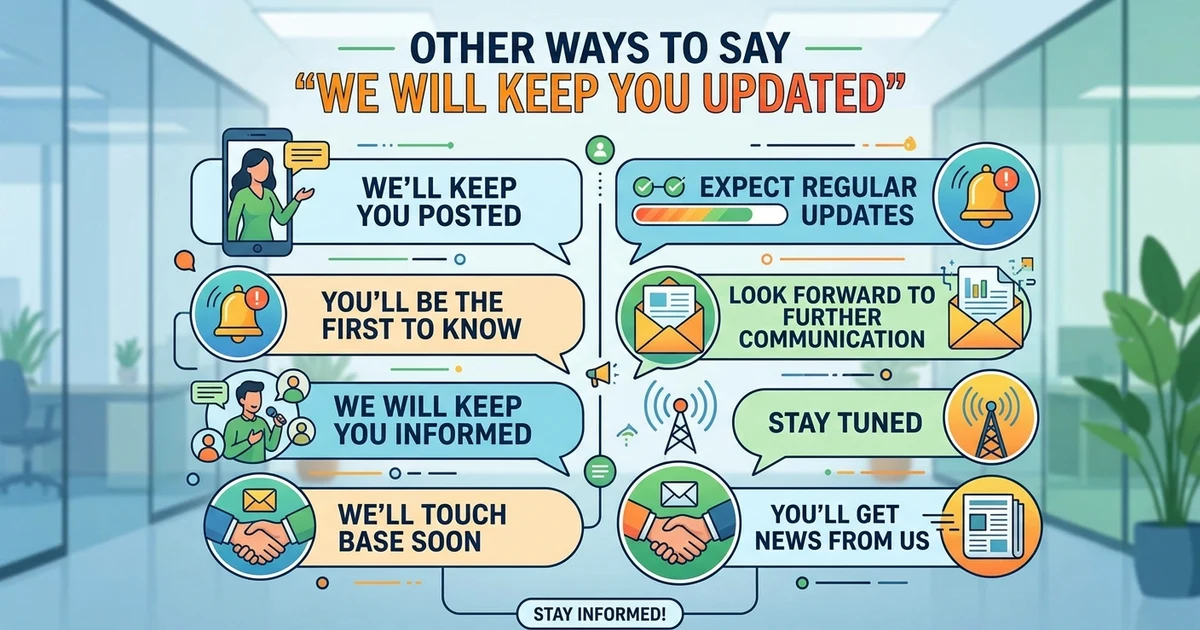
The best alternatives depend on your audience and the situation. You might want to promise regular progress reports, confirm that someone will hear about a decision, or let a customer know when new information becomes available. These alternatives to we will keep you updated include formal email phrases, concise workplace expressions, customer service responses, and natural everyday wording.
75+ Other Ways to Say We Will Keep You Updated
If you need a quick replacement for we will keep you updated, these phrases work well in professional emails, workplace conversations, and customer communications. Choose one that matches how often you expect to communicate and how much information you can reasonably promise.
- We will keep you informed.
- We will provide regular updates.
- We will keep you posted.
- We will share updates as they become available.
- We will notify you of any developments.
- We will let you know when we have more information.
- We will update you on our progress.
- We will keep you informed of any changes.
- We will share the latest information with you.
- We will communicate any important developments.
- We will provide further information soon.
- We will send updates as needed.
- We will let you know of any changes.
- We will keep you in the loop.
- We will share progress reports regularly.
- We will follow up with the latest details.
- We will contact you when there is an update.
- We will keep you informed throughout the process.
- We will let you know as things progress.
- We will provide updates at each key stage.
- We will share more details when available.
- We will keep you informed as the situation develops.
- We will communicate any new information promptly.
- We will reach out with further updates.
- We will keep you aware of our progress.
- We will let you know as soon as we hear anything.
- We will share any relevant changes.
- We will keep you informed of our findings.
- We will provide an update once we have confirmation.
- We will keep you updated on the next steps.
- We will send you the latest developments.
- We will provide status updates along the way.
- We will inform you when a decision has been made.
- We will follow up as soon as possible.
- We will keep communication open.
- We will share information as soon as it is confirmed.
- We will notify you when the next stage begins.
- We will keep you informed of the timeline.
- We will provide updates throughout the project.
- We will let you know when there is progress to report.
- We will share any significant developments.
- We will get back to you with more details.
- We will keep you informed moving forward.
- We will provide an update when we have something new to share.
- We will communicate the next steps shortly.
- We will keep you informed of the outcome.
- We will send you a progress report soon.
- We will let you know how things are progressing.
- We will share additional information as appropriate.
- We will notify you if anything changes.
- We will keep you informed at every important stage.
- We will provide timely updates.
- We will keep you up to date on developments.
- We will let you know when we receive a response.
- We will share the confirmed details with you.
- We will provide updates as the work progresses.
- We will contact you with any important news.
- We will follow up with more information.
- We will keep you informed until the matter is resolved.
- We will share updates at regular intervals.
- We will communicate our progress clearly.
- We will let you know once everything is finalized.
- We will provide further updates when necessary.
- We will keep you informed of any decisions.
- We will send you a notification when there is news.
- We will update you after our next review.
- We will share the next update by the agreed date.
- We will keep you informed as soon as new details emerge.
- We will reach out when we have a confirmed timeline.
- We will provide updates on any outstanding items.
- We will keep you informed of the latest changes.
- We will share the status with you shortly.
- We will let you know when we have an answer.
- We will continue to communicate any relevant updates.
- We will keep you posted on any further developments.
- We will provide a follow-up once we have an update.
- We will make sure you receive the relevant information.
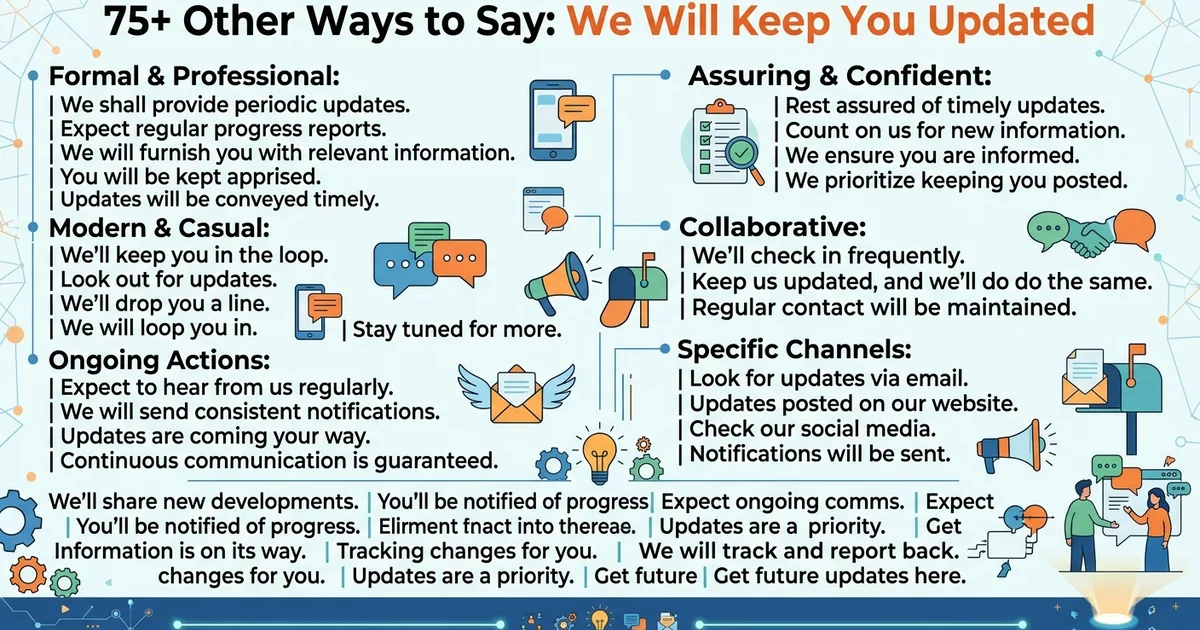
Formal Alternatives to We Will Keep You Updated
Formal wording is useful when communicating with clients, senior managers, business partners, suppliers, or other professional contacts. These alternatives sound polished without being unnecessarily complicated.
- We will keep you informed of all significant developments.
- We will provide regular progress reports.
- We will communicate any material changes promptly.
- We will notify you as soon as further information becomes available.
- We will provide an update following our review.
- We will keep you apprised of the situation.
- We will share additional details once they have been confirmed.
- We will communicate the outcome as soon as it is available.
- We will provide timely information regarding the next steps.
- We will keep you informed throughout the review process.
- We will issue further updates as appropriate.
- We will notify you when the matter has been finalized.
Best choice: We will keep you informed of all significant developments.
This phrase is suitable for formal emails because it communicates responsibility while avoiding a promise to send updates about every minor detail.
Professional Email Alternatives to We Will Keep You Updated
In business emails, the best wording is direct, courteous, and specific. Instead of repeating the same phrase in every message, choose an alternative that reflects the work being done and the next communication step.
- We will share a progress update by Friday.
- We will follow up once the review is complete.
- We will provide further details after confirming the information.
- We will keep you informed as we move forward.
- We will send you an update following our meeting.
- We will notify you once the next steps are confirmed.
- We will provide an update as soon as we receive a response.
- We will communicate any changes to the agreed timeline.
- We will share the latest status before the deadline.
- We will follow up with the confirmed details shortly.
Example email:
Subject: Project Status Update
EmailProject Status Update
Project Status Update
Hi [Name],
We are currently reviewing the remaining items and will share a progress update by Friday. If anything changes before then, we will let you know.
Best regards,
[Your Name]
This version is more useful than a general promise because it gives the recipient a clear expectation of when they will hear from you.
Friendly and Casual Ways to Say We Will Keep You Updated
A relaxed phrase works better when messaging teammates, familiar clients, colleagues, or people you communicate with regularly. These options sound natural without losing clarity.
- We will keep you posted.
- We will keep you in the loop.
- We will let you know what happens.
- We will share any news as it comes in.
- We will keep you up to speed.
- We will give you a heads-up if anything changes.
- We will let you know when we hear back.
- We will keep you posted on the progress.
- We will fill you in when we know more.
- We will touch base with an update soon.
Example:
We are waiting for confirmation from the supplier, but we will keep you posted as soon as we hear back.
Use casual alternatives when the relationship supports them. For a first email to a new client or a formal business announcement, keep the wording more neutral.
Customer Service Alternatives to We Will Keep You Updated
Customer service messages should reassure people without making promises your team cannot guarantee. The wording should explain what happens next and when the customer can expect further contact.
- We will notify you as soon as your order status changes.
- We will share any updates regarding your request.
- We will contact you when we have more information.
- We will keep you informed as we work on your case.
- We will let you know once your issue has been resolved.
- We will provide an update after reviewing your request.
- We will notify you when your shipment status changes.
- We will share the outcome as soon as it is confirmed.
- We will keep you informed of any delays.
- We will reach out if we need additional information.
Example customer service response:Message
Thank you for your patience. Our team is reviewing your request, and we will keep you informed as soon as we have an update.
If you know the next update date, include it. A specific and realistic timeframe is more reassuring than promising frequent communication without explaining what that means.
Alternatives for Project Updates and Team Communication
Project communication often involves deadlines, dependencies, approvals, and changing priorities. Choose a phrase that tells colleagues what kind of progress information they can expect.
- We will share updates at each project milestone.
- We will provide weekly progress reports.
- We will flag any risks or delays as they arise.
- We will update the team when key tasks are completed.
- We will communicate changes to the project timeline.
- We will share the latest status after each review.
- We will report any blockers that affect progress.
- We will notify everyone when the deliverables are ready.
- We will provide an update after the next planning meeting.
- We will keep stakeholders informed of major decisions.
- We will share revised timelines when necessary.
- We will communicate any changes to project priorities.
For example, instead of writing we will keep you updated on the project, you could say:
We will share a status report every Monday and flag any delays that may affect the delivery date.
This wording identifies both the communication schedule and the information the team will receive.
Short Alternatives for Quick Messages
Sometimes a long sentence is unnecessary. These short alternatives are useful in chat messages, quick email replies, and internal workplace communication.
- Will keep you posted.
- We will update you soon.
- More updates to follow.
- We will be in touch.
- We will let you know.
- Updates will follow.
- We will follow up.
- We will share more soon.
- We will send an update shortly.
- We will notify you when ready.
- We will report back soon.
- We will keep you informed.
Be careful with words such as soon and shortly. They suggest a relatively near timeframe, so use them only when you reasonably expect to follow up soon.
Alternatives for Delays, Pending Decisions, and Uncertain Situations
When information is incomplete, it is better to acknowledge the uncertainty than to imply that a decision or resolution is guaranteed. These phrases help you communicate honestly while keeping the recipient informed.
- We will let you know once we receive confirmation.
- We will share further details when they become available.
- We will update you when we have a clearer timeline.
- We will contact you as soon as we hear back.
- We will notify you if the expected date changes.
- We will provide an update when the decision is finalized.
- We will keep you informed while we investigate the issue.
- We will share what we can confirm at this stage.
- We will let you know if additional steps are required.
- We will follow up when we have a definite answer.
- We will communicate any changes to the current estimate.
- We will update you when the outstanding issue is resolved.
Example:
We are still waiting for final approval. We will let you know as soon as we receive confirmation.
This avoids suggesting that approval is certain when the decision is still pending.
Alternatives for Clients, Managers, and Business Partners
Different professional relationships call for slightly different wording. A manager may need a concise status report, while a client may want reassurance and a business partner may need confirmation of the next milestone.
For clients
- We will keep you informed of the progress on your request.
- We will share the next steps once they are confirmed.
- We will notify you of any changes that may affect delivery.
managers
- I will provide a status update after completing the review.
- I will flag any issues that may affect the deadline.
- I will report back once the outstanding tasks are complete.
For business partners
- We will communicate any developments that affect our plans.
- We will share the revised schedule once it is finalized.
- We will coordinate with your team and provide updates at key milestones.
Use we when speaking on behalf of a team or organization. Use I when you are personally responsible for the follow-up. This small change can make your message clearer and more accountable.
How to Choose the Best Alternative for Your Situation
The strongest alternative is not necessarily the most formal one. It is the phrase that accurately communicates what the recipient can expect.
| Context | What It Communicates | Tone | Best Use | Avoid If |
|---|---|---|---|---|
| We will keep you informed | Ongoing communication | Professional | Client emails | You need a specific deadline |
| We will keep you posted | Informal progress updates | Friendly | Team chats | A formal announcement |
| We will provide regular updates | A recurring communication schedule | Formal | Projects and reports | You cannot commit to a schedule |
| We will notify you once confirmed | An update after verification | Professional | Pending decisions | The information is already confirmed |
| We will share more details soon | Additional information is expected shortly | Neutral | Brief replies | Timing is uncertain |
| We will contact you if anything changes | Updates only when needed | Direct | Stable situations | The recipient expects regular reports |
| I will follow up by Friday | A personal commitment with a deadline | Accountable | Emails and task management | You cannot meet the deadline |
| We will keep you in the loop | Continued involvement | Casual | Internal collaboration | A highly formal setting |
Before choosing a phrase, consider three questions:
- How formal is the relationship? Use keep you informed for professional communication and keep you posted for a familiar audience.
- What information will you share? A status update, a confirmed decision, and an unexpected change are different types of communication.
- Can you commit to a timeframe? If possible, give a date or frequency rather than relying on vague timing.
How to Make Your Update Promises More Clear and Professional
A phrase can sound polished but still leave the recipient unsure about what happens next. Strong professional communication combines the update itself with a realistic next step.
Use these simple approaches.
- Add a timeframe: Instead of We will update you soon, write We will send an update by Thursday.
- Explain the trigger: Instead of We will be in touch, write We will contact you once the review is complete.
- Identify the information: Instead of We will keep you informed, write We will share any changes to the delivery schedule.
- Set a realistic frequency: Instead of We will provide regular updates, write We will send a weekly progress report.
- Avoid guarantees you cannot control: Instead of We will have an answer tomorrow, write We will follow up tomorrow with the latest status, even if a final decision is still pending.
A clear update promise builds expectations around communication, not around an outcome you may not control.
Generic vs. Specific Alternatives to We Will Keep You Updated
Small wording changes can make a message considerably more useful. Compare these common examples.
| Generic Phrase | More Specific Alternative | Why It Works Better |
|---|---|---|
| We will update you soon. | We will send an update by Thursday afternoon. | Gives a clear timeframe |
| We will keep you informed. | We will notify you when the application decision is finalized. | Identifies the event |
| We will keep you posted. | We will share the revised schedule after approval. | Explains what information is coming |
| We will be in touch. | I will email you once the supplier confirms the shipment date. | Identifies the channel and trigger |
| We will provide regular updates. | We will send a progress report every Friday. | Defines the frequency |
| We will let you know. | We will contact you if the estimated delivery date changes. | Clarifies what warrants an update |
The more specific version is usually preferable when the recipient needs to plan, make a decision, or wait for an important result. Shorter wording remains appropriate when the details are already understood.
Conclusion
Choosing the right alternative to we will keep you updated helps you communicate with more clarity, professionalism, and confidence. Use we will keep you informed for general business communication, we will keep you posted for casual conversations, and we will notify you once confirmed when accuracy matters.
Whenever possible, explain what information you will share and when the recipient can expect it. Avoid promising updates or outcomes you cannot control. A simple, realistic commitment makes your message more useful and helps set clear expectations with clients, coworkers, managers, and customers.
Frequently Asked Questions
1. What is the most professional way to say we will keep you updated?
We will keep you informed of all significant developments is a strong professional alternative. It works in business emails, client communication, and project updates. If you know when the next update will arrive, adding a date or timeframe makes the message more precise.
2. Is we will keep you posted formal or informal?
We will keep you posted is friendly and moderately informal. It works well with coworkers, familiar clients, and people you communicate with regularly. For formal reports, executive communication, or official correspondence, we will keep you informed is generally a safer choice.
3. What can I say instead of we will keep you updated in an email?
You can write We will provide a progress update by Friday, We will share further details once confirmed, or We will notify you of any significant changes. The best option depends on whether you are sharing regular progress, waiting for confirmation, or communicating an important development.
4. How do I say we will keep you updated without sounding repetitive?
Vary the wording according to the situation. Use we will follow up after the review, we will share further details, or we will notify you of any changes. Avoid replacing a familiar phrase with unnecessarily complicated wording just to sound different.
5. What is a short way to say we will keep you updated?
We will keep you posted, we will update you soon, and more updates to follow are concise alternatives. Use we will follow up by Friday when you want to make a clear commitment. Only use soon or shortly if the expected timing supports that promise.
6. How can I tell a client that I will provide updates?
Use courteous and specific wording, such as We will keep you informed of the progress on your request and notify you of any significant changes. If you can provide a schedule, explain when the client should expect the next update.
7. What should I say when I do not have new information yet?
You can say We are still waiting for confirmation and will contact you as soon as we have an update. This acknowledges the current situation without suggesting that a final answer is available. If appropriate, mention when you expect to follow up again.
8. Is we will keep you in the loop appropriate for work emails?
Yes, especially for internal communication and familiar professional relationships. It sounds conversational and suggests that someone will remain informed about developments. For formal client emails or official notices, we will keep you informed may sound more suitable.
9. How can I promise regular updates professionally?
State the frequency and type of communication. For example, We will provide a written progress report every Friday or We will send an update after each project milestone. Only commit to a schedule that your team can realistically maintain.
10. What is the difference between keep you updated and keep you informed?
Keep you updated often emphasizes new developments or changes over time. Keep you informed emphasizes ensuring that someone has the relevant information. The phrases overlap considerably, so either can work in most professional situations. Choose based on the tone and context rather than assuming they have completely different meanings.