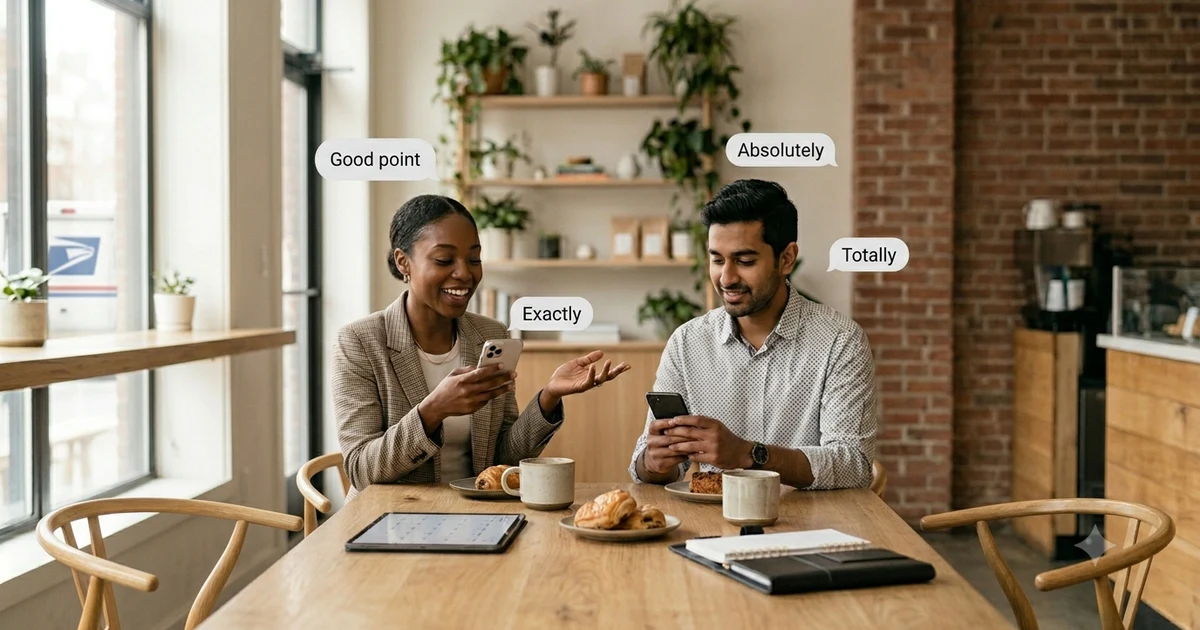
If you are looking for other ways to say I agree with you, you probably want better alternatives that fit different situations such as casual conversations, workplace discussions, texting, social media replies, or polite professional communication. While saying I agree with you works in most situations, English offers many natural alternatives that sound more confident, friendly, formal, or conversational depending on context.
Knowing different ways to express agreement helps you communicate more naturally, especially in conversations with friends, coworkers, clients, teachers, or online communities.
Quick Answer
Other ways to say I agree with you include phrases like Exactly, I think so too, You are right, I feel the same way, Absolutely, That makes sense, I am with you on that, and I couldn’t agree more.
Some options sound casual, while others work better in professional or formal conversations.
TL;DR
- Meaning: Expressing agreement with someone’s opinion or statement
- Tone: Can be casual, formal, friendly, or professional
- Common use: Everyday conversations, debates, texting, workplace discussions
- Where it appears: Text messages, social media, meetings, emails, discussions
- Formality: Depends on the phrase you choose
- Best use: Pick a phrase based on tone and relationship with the other person
What Other Ways to Say I Agree With You Means
The phrase I agree with you simply means you share the same opinion, belief, or viewpoint as another person.
People use agreement phrases when they want to:
- Show support for an idea
- Confirm shared opinions
- Participate in a discussion politely
- Build connection during conversation
- Respond positively to suggestions
English speakers often use alternatives because repeating the same phrase can sound repetitive.
Basic Explanation
Agreement phrases communicate that you understand another person’s perspective and support what they said.
Instead of always saying I agree with you, people often choose different wording based on:
- How formal the situation feels
- Whether the conversation is serious or casual
- Who they are speaking with
- Whether they want to sound polite, enthusiastic, or professional
For example:
Casual conversation may use Totally.
Professional discussion may use I share that perspective.
How People Use It in Texting or Online Conversation
In texting and online chat, people usually prefer shorter and more conversational agreement phrases.
Common options include:
- Totally
- Same here
- Exactly
- Facts
- True
- For sure
- 100 percent
- That is so true
On social media platforms like Instagram, TikTok, Reddit, and messaging apps, people often use quick responses instead of full sentences.
Examples:
Friend sends opinion about a movie
Reply: Totally
Comment on Instagram post
Reply: Facts
Group chat discussion
Reply: Same here
Online communication usually favors shorter responses.
Tone and Emotional Meaning
Agreement phrases can carry different emotional tones.
Here is how tone changes depending on wording.
| Phrase | Tone |
|---|---|
| Exactly | Strong agreement |
| Absolutely | Enthusiastic agreement |
| I think so too | Friendly and neutral |
| You are right | Respectful |
| Totally | Casual |
| I couldn’t agree more | Very strong agreement |
| That makes sense | Thoughtful agreement |
| I am with you on that | Supportive |
The exact phrase changes how people perceive your response.
Common Situations Where It Appears
People express agreement in many everyday situations.
Common examples include:
- Talking with friends
- Classroom discussions
- Team meetings
- Workplace conversations
- Social media comments
- Online debates
- Family discussions
- Text messaging
- Customer service conversations
- Group project discussions
Choosing the right phrase depends on the situation.
Examples in Real Conversations
Below are natural examples used in everyday English.
Situation: Talking with a friend
Example
Friend says the weather has been terrible lately
Response
Totally
Meaning
Casual agreement between friends
Situation: Workplace meeting
Example
Coworker suggests improving customer support
Response
I share that perspective
Meaning
Professional agreement
Situation: Family discussion
Example
Parent suggests saving money for future expenses
Response
That makes sense
Meaning
Respectful agreement
Situation: Online conversation
Example
Someone says remote work improves productivity
Response
I think so too
Meaning
Friendly agreement during discussion
Situation: Debate
Example
Someone makes a strong argument about education reform
Response
I couldn’t agree more
Meaning
Strong support for their opinion
Similar Terms or Related Phrases
There are many alternatives depending on tone.
Casual alternatives
- Totally
- Same here
- True
- Yep
- For sure
- Exactly
- Good point
Professional alternatives
- I share your view
- I agree completely
- That seems reasonable
- I support that idea
- I see it the same way
- I believe that is correct
Strong agreement alternatives
- Absolutely
- Without question
- I completely agree
- You are absolutely right
- I couldn’t agree more
Each option creates a slightly different impression.
When You Should Use It
Use agreement phrases when you want to communicate support clearly.
Good situations include:
- Supporting a colleague during meetings
- Replying in text conversations
- Participating in classroom discussions
- Commenting on social media posts
- Confirming shared opinions
- Responding during interviews or discussions
- Building rapport during conversation
Choosing varied wording makes communication sound more natural.
When You Should Avoid It
Some phrases sound too casual for certain situations.
Avoid informal agreement phrases when:
- Writing professional emails
- Speaking with senior management
- Giving academic presentations
- Communicating with formal clients
- Writing legal or official documents
For example:
Avoid saying Totally in a business proposal.
Better choice:
I agree with that recommendation
Or
I share that viewpoint
Context matters.
Is It Formal or Informal
Agreement phrases can be either formal or informal.
Informal
- Totally
- Same here
- Yep
- True
- For sure
- Exactly
Best for:
- Friends
- Text messages
- Social media comments
- Casual chats
Formal
- I completely agree
- I share your perspective
- I support that position
- I believe that is correct
- I agree with your assessment
Best for:
- Workplace communication
- Business emails
- Academic discussions
- Professional meetings
Always match your wording to the situation.
Common Misunderstandings
Sometimes agreement phrases can create confusion.
Examples:
Saying Totally in formal communication
Can sound too casual in professional settings.
Saying You are right during sensitive discussions
May sound like you are judging instead of discussing.
Saying Exactly too often
Can feel repetitive during long conversations.
Using internet slang
Words like Facts may confuse people who are unfamiliar with social media language.
Small wording choices affect communication.
USA and Tier 1 Country Usage
In countries like the United States, Canada, United Kingdom, and Australia, people use many alternatives instead of repeating I agree with you.
Common American conversational phrases include:
- Totally
- Exactly
- Absolutely
- Good point
- Fair enough
- You got that right
- I think so too
In workplace communication, more professional alternatives are common.
Examples:
- I share that opinion
- I support that recommendation
- I agree with your assessment
Online conversations usually favor shorter responses.
Language often changes depending on platform and audience.
Quick Reference Table
| Context | What It Means | Tone | Best Use | Avoid If |
|---|---|---|---|---|
| Exactly | Strong agreement | Casual-neutral | Discussion | Formal documents |
| Totally | Full agreement | Casual | Friends, texting | Workplace meetings |
| Absolutely | Strong support | Positive | Conversations | Very formal writing |
| I think so too | Shared opinion | Friendly | Everyday chat | Formal reports |
| I share your perspective | Professional agreement | Formal | Business discussions | Casual texting |
| Good point | Respect for idea | Friendly | Group discussions | Official writing |
| I couldn’t agree more | Strong agreement | Enthusiastic | Debates | Minor discussions |
Conclusion
Knowing other ways to say I agree with you helps make your communication sound more natural and adaptable.
Sometimes a simple Exactly works perfectly in a text conversation. In professional discussions, a phrase like I share your perspective sounds more polished. The best option depends on tone, relationship, and context.
Using different agreement phrases improves both spoken and written communication while helping conversations feel more natural.
FAQs
What does other ways to say I agree with you mean in text?
It refers to alternative phrases people use instead of saying I agree with you, such as Exactly, True, or Same here.
What are casual alternatives to I agree with you?
Common casual options include:
- Totally
- Yep
- Exactly
- Same here
- For sure
Is saying I agree with you rude?
No. It is generally polite. Tone and context determine how people interpret it.
Can I use agreement phrases in professional messages?
Yes. Professional options include:
- I share your perspective
- I completely agree
- I support that recommendation
What is stronger than saying I agree with you?
Stronger alternatives include:
- Absolutely
- I completely agree
- I couldn’t agree more
What do people say online instead of I agree with you?
Popular online responses include:
- Facts
- True
- Exactly
- Same here
- 100 percent
Is Totally professional language?
Usually no. It sounds casual and works better in informal conversations.